

EU 72-Hour Emergency Kit: What Food, Water, Medicines and Essentials Should You Keep?
Europe’s 72-hour preparedness message is becoming a practical household issue in 2026. Here’s what the EU actually recommends, what belongs in a basic emergency plan, and what the policy does and does not mean.
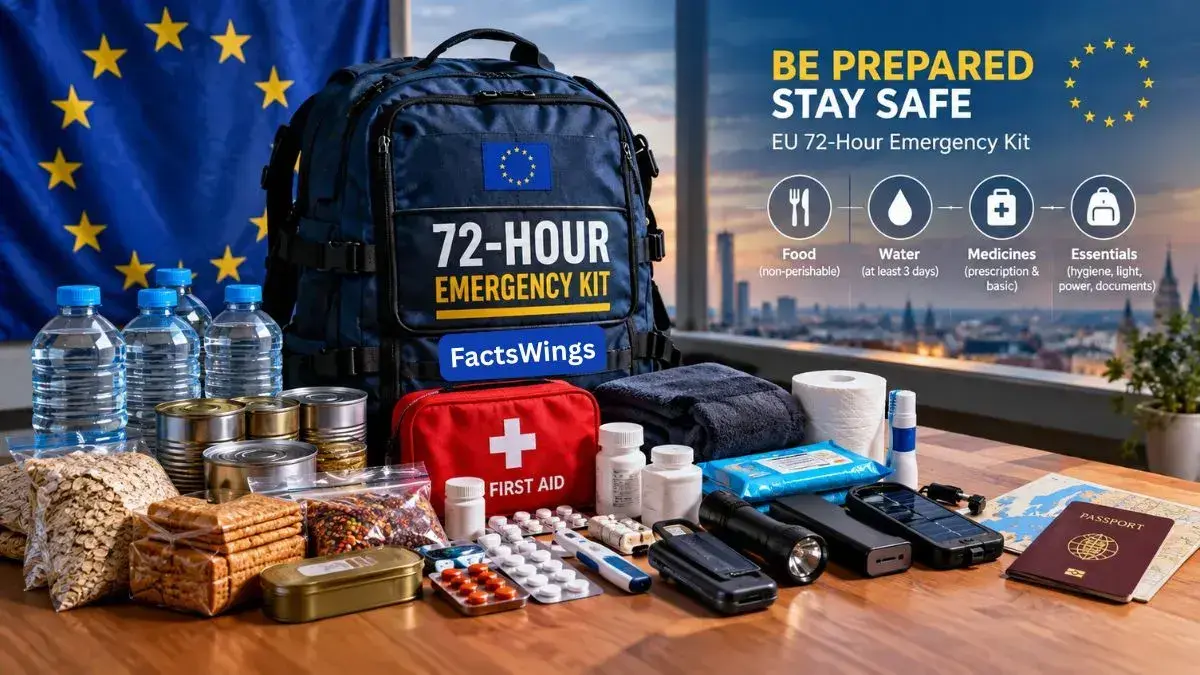
The European Union’s 72-hour preparedness message is easy to summarize and easy to misrepresent.
The basic idea is that households should be better able to manage essential needs for at least three days if a major disruption affects normal services. But this is not simply a new European instruction to “prepare for war.”
In 2026, the European Commission describes preparedness as a broader, all-hazards effort. The risks include geopolitical tensions and conflict, but also cyberattacks, climate-related events, health emergencies and natural hazards. The Commission says EU countries are raising awareness and providing guidance on 72-hour household self-sufficiency.
The 72-Hour Message Is Still Relevant in 2026
The 72-hour target itself is not a brand-new 2026 policy. It was included in the European Commission’s Preparedness Union Strategy adopted in March 2025.
What matters for readers in 2026 is that the policy has moved into a broader implementation and awareness phase.
In March 2026, the European Commission said the EU and Member States were raising awareness and giving guidance on 72-hour household self-sufficiency. The Commission also highlighted work on stockpiling, medical countermeasures, emergency response and water security.
That makes the story more significant than a one-day headline from 2025. The EU is building a wider preparedness framework in which governments, institutions, businesses, communities and households all have a role.
Why Does the EU Want Households Ready for Three Days?
The logic is straightforward.
During a major emergency, normal systems can become temporarily unreliable. Electricity may fail. Roads can become difficult to use. Shops may close. Mobile networks can become congested. Water services can be disrupted. Emergency responders may also have to prioritize people facing immediate danger.
A household that already has basic supplies does not need to make an urgent shopping trip for every essential item.
That does not replace government assistance. It creates a short buffer between the beginning of a disruption and the restoration of normal services.
What the EU Actually Means by “Preparedness”
The European Commission describes its approach as an all-hazards strategy. Instead of preparing separately for every possible disaster, the EU wants systems and people to be capable of dealing with different types of disruption.
That includes natural hazards, climate risks, health emergencies, cyber incidents, geopolitical tensions and conflicts.
The distinction matters because headlines can make the 72-hour message sound much narrower than the official policy actually is.
What Should Actually Go Into a 72-Hour Emergency Kit?
There is no single universal shopping list that fits every household in Europe.
A family in Finland may have different needs from a family in Spain. An apartment household may have different requirements from a rural home. A household with a baby, an older person, a disability or a medical condition may need additional supplies.
The best approach is therefore to start with the basics and then add what the household actually needs.
1. Drinking Water
Water should be one of the first priorities in any household emergency plan.
The exact quantity should follow national or local guidance because water requirements depend on household size, climate, health needs and other circumstances. The EU’s 72-hour concept should not be confused with one universal EU-mandated household water quantity.
Keep water in clean, sealed containers intended for water storage and follow the storage instructions supplied with the product.
Remember that water may be needed not only for drinking but also for food preparation, hygiene and the needs of household members with additional requirements.
2. Shelf-Stable Food
Emergency food does not need to be expensive or unusual.
A practical strategy is to keep foods that the household already eats and that can be stored safely without normal refrigeration.
- canned vegetables
- canned beans and other legumes
- canned fish or other shelf-stable protein foods
- oats and cereals
- rice and pasta
- crackers and long-life bread products
- nuts and seeds, when suitable
- dried fruit
- long-life milk or suitable alternatives
- ready-to-eat shelf-stable meals
The goal is not to create a giant stockpile. It is to have enough suitable food to bridge a temporary disruption.
Rotating the supply through normal household meals can also reduce waste. Use older products first and replace them during ordinary shopping.
3. Essential Medicines
This is where generic internet lists can become risky.
Medicine needs are personal. A household should plan for access to its essential regular medicines, but the appropriate amount and storage conditions depend on the person, the medicine and national rules.
Anyone who depends on prescription medicine should discuss emergency planning with a doctor or pharmacist when appropriate.
Keep medicines in their original packaging where practical and follow their storage instructions. Do not begin taking medicines simply because they appear on an online emergency checklist.
4. First-Aid Supplies
A basic first-aid kit can be useful for minor injuries while access to normal shops or services is disrupted.
The contents can be kept simple and should reflect ordinary household needs and local guidance.
5. Lighting and Power
A power outage can make an otherwise manageable situation much harder.
Useful household items can include:
- a reliable flashlight
- appropriate spare batteries
- a charged phone power bank
- an alternative way to receive official information, such as a suitable radio
During a crisis, official alerts and instructions should take priority over unverified social-media posts.
6. Important Documents
Emergency preparation also means knowing where important information is kept.
- identity documents
- insurance information
- medical information
- prescription information
- emergency contact details
- important family information
Sensitive documents should be stored securely rather than left in an openly accessible emergency bag.
7. Hygiene and Personal Needs
Basic hygiene products are easy to overlook.
Depending on the household, this may include soap, sanitary products, toilet paper, basic cleaning supplies and other personal-care items.
Families should also consider nappies, infant supplies or accessibility-related personal-care products where needed.
A Practical 72-Hour Checklist
- Safe drinking water planned for everyone
- Three days of suitable shelf-stable food
- Essential regular medicines planned safely
- Basic first-aid supplies
- Flashlight and batteries where required
- Charged phone power bank
- Reliable way to receive official information
- Important documents and emergency contacts
- Basic hygiene supplies
- Suitable clothing or blankets
- Emergency cash where appropriate
- Baby supplies if required
- Accessibility-related supplies if required
- Pet food and essential pet supplies if required
For more practical guidance on staying prepared in a changing digital and physical world, read our Cybersecurity Best Practices guide and explore the latest Science & Technology Insights from FactsWings.
The 2026 Development: Citizens Are Now Part of the Conversation
One of the most notable developments in 2026 is that the EU has brought citizens more directly into the preparedness discussion.
In March, the European Commission invited 150 randomly selected citizens from across all 27 Member States to discuss how the Preparedness Union Strategy should be implemented.
In May, the Commission said the citizens’ panel had delivered 20 recommendations. They covered risk communication, information integrity, inclusion, self-sufficiency, engagement and education.
Among the recommendations was wider communication of national personal-preparedness guidance, including household information about 72-hour self-sufficiency. The recommendations also called for seniors and people with disabilities to be included in preparedness communication.
That is an important shift: preparedness is being treated not only as a government responsibility but as something that needs to be understood at household and community level.
Europe Is Also Building Larger Emergency Reserves
The household kit is only one layer of the strategy.
The EU has also been working on stockpiling and medical countermeasures. In its 2026 update, the Commission highlighted the EU Stockpiling Network, which brings national stockpiling authorities together to improve coordination and the delivery of essential goods during emergencies.
The broader EU stockpiling work covers essential supplies such as food, water, fuel and medicines. The Commission’s strategy also addresses logistics, supply gaps and coordination between countries.
This creates a useful distinction:
| Household preparedness | EU-level preparedness |
|---|---|
| Basic food and water | Strategic stockpiles |
| Essential personal medicines | Medical countermeasures |
| Lighting and communication | Emergency response coordination |
| Important documents | Cross-border assistance |
| Household-specific needs | Water, energy and critical infrastructure resilience |
Does This Mean the EU Is Preparing for War?
The answer requires nuance.
The European Commission explicitly includes geopolitical tensions and conflicts among the threats the EU is preparing for. Its strategy also includes civil-military preparedness.
But the same strategy includes natural hazards, climate change, health crises and cybersecurity risks. The official framework is therefore broader than military preparedness alone.
For readers, the most accurate interpretation is this: Europe is trying to improve resilience against a wider range of serious disruptions, including security-related risks.
That is different from saying that the EU has announced an imminent war.
How to Build the Kit Without Panic Buying
Preparedness does not need to become an expensive shopping project.
A household can build its supply gradually.
- Count the people who normally live in the home.
- List special dietary, medical and accessibility needs.
- Check local emergency guidance.
- Start with water and shelf-stable food.
- Add lighting and communication equipment.
- Review regular medicines with an appropriate health professional.
- Add supplies for babies, older people, disabilities or pets when needed.
- Rotate food through normal household use.
- Review the kit every few months.
This approach is generally more practical than buying large quantities of unfamiliar products that may eventually expire.
What Families Should Do Differently in 2026
The most useful preparedness plan is not necessarily the biggest one. It is the one that reflects the actual household.
A family with young children needs different supplies from a single adult. Someone who relies on powered medical equipment has a different planning problem from someone who does not. A household in a flood-prone area may have different priorities from one facing wildfire or extreme heat.
The EU’s 2026 citizen recommendations reinforce this idea by calling for preparedness communication that is more inclusive and tailored to individual needs.
Frequently Asked Questions
Is the EU asking households to prepare for 72 hours in 2026?
Yes. The 72-hour household self-sufficiency concept remains part of the EU preparedness programme, and the European Commission says EU countries are raising awareness and providing guidance on it.
Was the 72-hour policy created in 2026?
No. The minimum 72-hour population self-sufficiency target was included in the EU Preparedness Union Strategy adopted in March 2025. In 2026, the EU is continuing implementation, awareness and citizen engagement around preparedness.
Does the EU say a war is coming?
No such conclusion appears in the official 72-hour household guidance. The EU preparedness framework includes geopolitical conflict among its risks, but it also covers cyberattacks, climate-related events, health emergencies and natural hazards.
What food should I keep for three days?
Choose familiar shelf-stable foods that can be stored safely without normal refrigeration and that meet the household’s dietary needs.
How much water should I store?
The amount should follow national or local guidance and the needs of the household. The 72-hour EU concept does not establish one universal household water quantity for every person.
What medicines should be included?
Plan for access to essential regular medicines that household members already need. Specific medicine quantities and storage requirements should be discussed with a doctor or pharmacist where appropriate.
Should I buy a huge emergency stockpile?
No. A gradual approach using familiar, shelf-stable household products and regular rotation can be more practical than panic buying.
The Bottom Line
Europe’s 72-hour preparedness push is less dramatic and more practical than some headlines suggest.
The EU is building a broader resilience system in which governments, institutions, businesses, communities and households all have a role. In 2026, that work includes household guidance, citizen engagement, stockpiling coordination, medical preparedness, water resilience and stronger emergency-response structures.
For an individual household, the message is simple: keep basic supplies available, understand the needs of the people in your home, know where official information comes from and review your emergency plan regularly.
The 72-hour target is not a prediction of what will happen next. It is a resilience measure designed for the period when normal services may not be working normally.
And that distinction is probably the most important thing to understand before buying anything: prepare calmly, use reliable information and build a plan around the real needs of your household.
Sources & Evidence
The Commission’s current preparedness information describes the all-hazards approach and confirms that the EU and Member States are supporting awareness and guidance on 72-hour household self-sufficiency.
Read the official EU preparedness information
The Commission reported that 150 citizens from the 27 Member States were brought together to help shape future preparedness actions. The same update describes progress on stockpiling, medical preparedness, water security and 72-hour household guidance.
Read the March 2026 Commission update
The Commission published 20 recommendations from the European Citizens’ Panel on preparedness, including wider communication of household 72-hour self-sufficiency guidance and more inclusive preparedness information.
Read the May 2026 recommendations
The EU’s stockpiling strategy covers essential goods including food, water, fuel and medicines and is part of the wider Preparedness Union agenda.
Read the European Commission stockpiling update
Editorial transparency: The 72-hour target originated in the EU’s 2025 Preparedness Union Strategy. This article uses 2026 Commission updates to explain how the preparedness programme is being implemented and discussed in 2026. It does not present the original 2025 announcement as a new 2026 policy.