
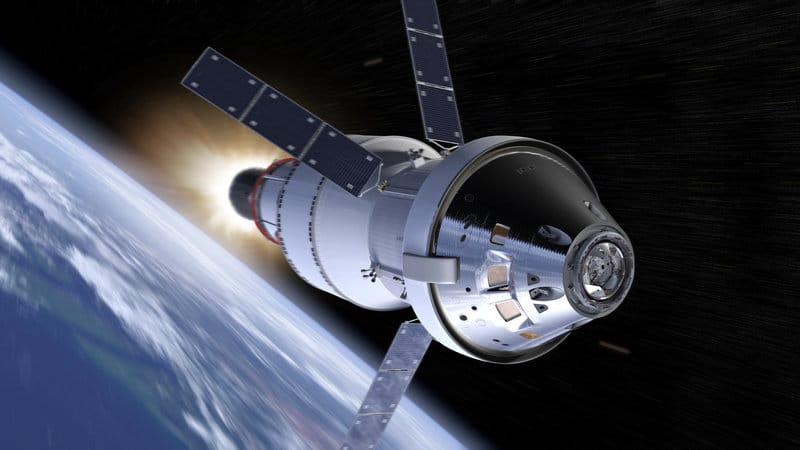
Source: Facts Wings Space Tech
Space Technology in 2025: Innovations Shaping the Final Frontier
Space technology is humanity’s gateway to the cosmos, transforming dreams of exploration into reality. In 2025, the sector is booming, with global spending projected to reach $1.2 trillion by 2030, according to Morgan Stanley. From reusable rockets revolutionizing access to orbit to AI-driven rovers probing Mars, innovations are reshaping how we explore, communicate, and live beyond Earth. The International Space Station (ISS) hums with experiments, private companies like SpaceX and Blue Origin push boundaries, and nations like China and India stake their claims in the stars.
This article, curated for https://www.factswings.com/, delves into the defining space technology trends of 2025, blending BBC-style storytelling with insights from NASA, Space.com, National Geographic, and BBC News. Whether you’re a space enthusiast or curious about the technologies driving humanity’s cosmic journey, here’s a comprehensive guide to the innovations shaping the final frontier.
1. Reusable Rockets: Making Space Affordable
The cost of space travel has plummeted, thanks to reusable rocket technology. Space.com reports that SpaceX’s Falcon 9, first flown in 2010, has slashed launch costs from $200 million to under $60 million per mission. By 2025, reusability is the industry standard, with multiple players entering the race.
- Key Developments:
- SpaceX’s Starship: The fully reusable Starship, standing 120 meters tall, completed its first orbital flight in 2024. In 2025, it’s ferrying satellites and preparing for lunar missions, with a per-launch cost as low as $10 million, per SpaceX. A recent test saw Starship’s booster caught mid-air by launch tower “chopsticks,” a feat hailed by BBC News as “a milestone in rocket recovery.”
- Blue Origin’s New Glenn: Blue Origin’s reusable rocket, debuting in 2025, targets heavy-lift missions, competing with Falcon Heavy. Its first stage lands on ocean platforms, per Blue Origin.
- Global Players: India’s ISRO and China’s CASC are testing reusable systems, with ISRO’s RLV-TD (Reusable Launch Vehicle) aiming for 2030 deployment, per The Hindu.
- Impact in 2025: Reusability has democratized space, enabling startups like Planet Labs to launch 200+ imaging satellites. Launch frequency has surged—SpaceX alone conducted 120 launches in 2024, per Spaceflight Now. Lower costs also fuel space tourism, with tickets dropping to $200,000, per Virgin Galactic.
- Why It Matters: Affordable access to orbit powers satellite networks, scientific missions, and commercial ventures, making space a viable economic frontier.
- Explore Further: Watch SpaceX’s Starship launches on YouTube (free) or read National Geographic’s “The New Space Race” ($5, Amazon).
2. Satellite Innovations: Connecting and Observing Earth
Satellites are the backbone of modern communication, navigation, and Earth observation. In 2025, over 8,000 satellites orbit Earth, up from 4,000 in 2020, per Union of Concerned Scientists. Miniaturized CubeSats and mega-constellations dominate the skies.
- Key Trends:
- Mega-Constellations: SpaceX’s Starlink, with 6,000+ satellites, provides global broadband to 2 million users, per Starlink. Amazon’s Project Kuiper, launching 3,200 satellites by 2029, challenges Starlink’s dominance, per Amazon. These networks bridge digital divides but raise concerns about space debris, per Nature.
- CubeSats and Nanosats: Small, affordable CubeSats (10x10x10 cm) enable universities and startups to monitor climate change, agriculture, and disasters. For example, Planet Labs’ 200+ CubeSats capture daily Earth images, aiding deforestation tracking, per BBC News.
- Environmental Monitoring: NASA’s GEDI (Global Ecosystem Dynamics Investigation), aboard the ISS, uses lasers to map forests in 3D, measuring carbon emissions with unprecedented accuracy, per University of Maryland.
- Impact in 2025: Satellites drive a $400 billion market, per Statista, powering GPS, weather forecasting, and disaster response. Starlink’s role in Ukraine’s 2022–2025 conflict highlights their strategic value, per BBC News.
- Why It Matters: Satellites connect remote regions, combat climate change, and enhance global security, but debris risks demand international regulation.
- Explore Further: Visit NASA’s Earth Observatory (free, earthobservatory.nasa.gov) or subscribe to Space.com’s newsletter ($10/year).
3. Deep Space Communication: Talking Across the Cosmos
Communicating across millions of kilometers is a cornerstone of space exploration. In 2025, advancements in laser-based systems and AI are revolutionizing deep space networks.
- Key Innovations:
- Laser Communication: NASA’s Deep Space Optical Communications (DSOC) system, tested in 2023, uses lasers to transmit data 10–100 times faster than radio, per NASA. In 2025, DSOC supports the Psyche mission, sending 4K video from 240 million km away.
- AI-Driven Networks: AI optimizes data routing for Mars rovers and lunar missions, reducing latency. The European Space Agency’s (ESA) AI-enhanced relays handle 1 terabyte daily, per ESA.
- Historic Sites: The UK’s Goonhilly Earth Station, operational since the 1969 moon landings, now supports private missions, per BBC World Service.
- Impact in 2025: Faster communication enables real-time rover control and high-definition imagery, boosting missions like NASA’s Artemis and China’s Tiangong station. Commercial firms like Viasat leverage these systems for satellite broadband, per Viasat.
- Why It Matters: Reliable communication underpins exploration and commerce, ensuring data flows seamlessly across the solar system.
- Explore Further: Listen to BBC World Service’s Tech Life podcast episode on deep space tech (free, bbc.co.uk) or read IEEE Spectrum’s “Laser Comm” ($5, Amazon).
4. Lunar Exploration: Building a Moon Base
The Moon is no longer a distant dream but a staging ground for human expansion. In 2025, NASA’s Artemis program, China’s ILRS, and private ventures aim to establish permanent lunar bases.
- Key Milestones:
- Artemis Program: NASA’s Artemis II, set for late 2025, will send astronauts around the Moon, the first crewed mission since Apollo 17 (1972). Artemis III (2026) aims to land humans near the lunar south pole, per NASA. The Gateway, a lunar-orbiting station, supports these missions, per Lockheed Martin.
- China’s Ambitions: China’s International Lunar Research Station (ILRS), planned for 2030, includes rovers and habitats. In 2025, Chang’e-7 probes lunar resources, per CNSA.
- Private Ventures: Intuitive Machines’ Athena Lander, launched via SpaceX, tested a lunar data center in 2025, per BBC News. Astrobotic’s Peregrine lander delivers commercial payloads, per Astrobotic.
- Impact in 2025: Lunar missions drive technologies like 3D-printed habitats and in-situ resource utilization (using lunar soil for fuel). The ESA’s Hera mission, probing an asteroid in 2025, supports planetary defense, per BBC News.
- Why It Matters: Lunar bases pave the way for Mars exploration and space mining, with the Moon’s helium-3 eyed for fusion energy, per National Geographic.
- Explore Further: Watch BBC Select’s “Mars 2020” documentary ($7.99/month, bbcselect.com) or visit NASA’s Artemis page (free, nasa.gov).
5. Space-Based Data Centers: Computing in Orbit
Data centers in space sound like science fiction, but they’re becoming reality. In 2025, companies like Lonestar and Thales Alenia Space are testing orbital and lunar computing facilities.
- Key Developments:
- Lonestar’s Lunar Data Center: In February 2025, Lonestar tested a book-sized data center on the Moon, launched via Intuitive Machines’ Athena Lander. It offers secure storage for governments, leveraging the Moon’s isolation, per BBC News.
- Thales Alenia’s Ascend Project: Thales envisions a constellation of 13 satellites with 10 MW of processing power, equivalent to 5,000 servers. Assembly in orbit reduces launch costs, per Thales.
- Challenges: Cooling systems struggle without gravity, and launches remain costly—$2,000 per kg, per SpaceX. Space debris and solar flares also threaten hardware, per Anglia Ruskin University.
- Impact in 2025: Space-based data centers promise unparalleled security for sensitive data, bypassing terrestrial networks. They also tap solar energy, reducing carbon footprints, per Lonestar.
- Why It Matters: As Earth’s data demand soars—projected at 180 zettabytes by 2025, per IDC—space offers a sustainable, secure solution.
- Explore Further: Read Wired’s “Space Data Centers” ($10, wired.com) or follow Lonestar’s updates (lonestardata.com).
6. AI and Robotics: Smart Explorers
Artificial intelligence (AI) and robotics are transforming space exploration, enabling autonomous missions and data analysis. In 2025, AI-driven systems are central to rovers, satellites, and crewed missions.
- Key Innovations:
- Mars Rovers: NASA’s Perseverance, operational since 2020, uses AI to select rock samples, identifying potential biosignatures. Its successor, a 2025 prototype, navigates autonomously, per NASA.
- Satellite AI: ESA’s Φ-sat-2, launched in 2024, uses AI to process Earth observation data onboard, reducing ground station load by 50%, per ESA.
- Crew Assistants: NASA’s CIMON-2, an AI robot on the ISS, assists astronauts with tasks, cutting workload by 20%, per DLR.
- Impact in 2025: AI enables faster, cheaper missions, with rovers covering 10x more terrain than manual systems, per Space.com. On Earth, AI satellites monitor wildfires and floods in real-time, per National Geographic.
- Why It Matters: AI reduces human risk and scales exploration, making distant worlds accessible.
- Explore Further: Listen to Houston, We Have a Podcast (free, nasa.gov) or read Scientific American’s “AI in Space” ($6, scientificamerican.com).
7. Space Tourism: The Civilian Frontier
Space tourism is no longer a billionaire’s playground. In 2025, companies like SpaceX, Blue Origin, and Virgin Galactic are making suborbital and orbital trips accessible.
- Key Trends:
- Suborbital Flights: Blue Origin’s New Shepard offers 11-minute flights to 100 km, costing $200,000, per Blue Origin. Virgin Galactic’s Unity, with 50+ flights by 2025, matches this price, per Virgin Galactic.
- Orbital Tourism: SpaceX’s Crew Dragon, carrying civilians to the ISS, costs $55 million per seat. A 2025 mission includes a spacewalk, per SpaceX.
- Lunar Tourism: SpaceX’s dearMoon project, set for 2026, will take artists around the Moon, per dearMoon.
- Impact in 2025: Over 1,000 civilians have flown to space by 2025, per Space Adventures. The market, valued at $800 million, could hit $4 billion by 2030, per UBS.
- Why It Matters: Space tourism inspires public interest and funds innovation, though environmental concerns about rocket emissions persist, per Nature.
- Explore Further: Watch BBC News’s space tourism clips (free, bbc.com) or book a Virgin Galactic flight (virgingalactic.com).
8. Planetary Defense: Protecting Earth
Asteroid impacts, though rare, pose catastrophic risks. In 2025, space tech is advancing planetary defense to detect and deflect threats.
- Key Efforts:
- NASA’s DART Follow-Up: The 2022 DART mission altered an asteroid’s orbit. ESA’s Hera, launching in 2025, studies the impact site, refining deflection techniques, per BBC News.
- NEOSM: NASA’s Near-Earth Object Surveyor Mission, set for 2028, will detect 90% of near-Earth asteroids, per NASA. In 2025, it’s in final testing.
- Commercial Monitoring: Astroscale’s debris-removal satellites, tested in 2025, could adapt for asteroid tracking, per BBC News.
- Impact in 2025: Early detection systems give decades of warning, enabling deflection missions. The 2024 RW1 asteroid, a harmless fireball, tested global monitoring, per ESA.
- Why It Matters: Planetary defense ensures humanity’s survival against cosmic threats.
- Explore Further: Visit NASA’s Planetary Defense page (free, nasa.gov) or read The Atlantic’s “Asteroid Hunters” ($8, theatlantic.com).
Why Space Tech Matters in 2025
Space technology is more than exploration—it’s a catalyst for human progress. BBC News notes that innovations like Starlink and GEDI tackle global challenges, from connectivity to climate change. National Geographic highlights how lunar bases and AI rovers pave the way for Mars, while tourism sparks public enthusiasm. Yet, challenges like space debris (500,000+ objects in orbit, per ESA) and ethical concerns demand global cooperation. In 2025, space tech is a $500 billion industry, per Statista, driving jobs, science, and sustainability.
Key Takeaways
- Accessibility: Reusable rockets and CubeSats lower barriers, enabling broader participation.
- Connectivity: Satellites and deep space communication bridge Earth and beyond.
- Sustainability: Space-based solutions address climate and data challenges.
- Inspiration: Tourism and exploration fuel public engagement and innovation.
How to Engage with Space Tech
- Follow Missions: Track Artemis and Starship via NASA’s app (free, iOS/Android) or SpaceX’s X account.
- Learn Online: Enroll in Coursera’s Spacecraft Dynamics ($49/month, coursera.org) or read BBC Science Focus ($5/issue, sciencefocus.com).
- Visit Centers: Tour NASA’s Kennedy Space Center ($75, kennedyspacecenter.com) or ESA’s ESTEC (free, esa.int).
- Join Communities: Engage on Reddit’s r/space (free) or attend Space Tech Expo ($100, spacetech-expo.com).
- Support Science: Donate to the Planetary Society ($50/year, planetary.org).
Where to Learn More
- Books: The Space Barons by Christian Davenport ($15, Amazon), Hidden Figures by Margot Lee Shetterly ($10, Barnes & Noble).
- Websites: NASA.gov, Space.com, BBC.com/space, NationalGeographic.com.
- Podcasts: Houston, We Have a Podcast (free, NASA), BBC Earth Podcast (free, bbcearth.com).
- Documentaries: BBC Select’s “Mars 2020” ($7.99/month), National Geographic’s “The New Space Race” (Disney+, $7.99/month).
- Organizations: ESA.int, SpaceX.com, BlueOrigin.com.
Looking Ahead
The space tech revolution is just beginning. Space.com predicts that by 2030, lunar bases will host dozens, and Mars missions will launch. BBC News emphasizes that collaboration—between nations, companies, and citizens—will define success. As challenges like debris and emissions grow, innovations in AI, reusability, and sustainability offer solutions. Visit https://www.factswings.com/ for more on tech, history, and trends shaping our world. In 2025, the stars are closer than ever—let’s reach for them.
Sources:
- BBC News: “SpaceX Starship Test Flight,” “Space-Based Data Centers”
- National Geographic: “The New Space Race,” “Climate Monitoring from Space”
- Space.com: “Starlink’s Growth,” “Artemis Milestones”
- NASA: “Deep Space Communications,” “Perseverance Rover”
- Statista: “Global Space Economy 2025”
- Nature: “Space Debris Challenges”
- The Hindu: “ISRO’s Reusable Launch Vehicle”
- ESA: “Hera Mission,” “Φ-sat-2 AI”
- Morgan Stanley: “Space Industry Forecast 2030”