

Can You Live on $10 a Day in the U.S.A in 2026?
Ten dollars a day sounds like a strict budget. But can it cover food, housing, transport and essential bills in the United States? The answer depends on one crucial factor: whether you already have a place to live.
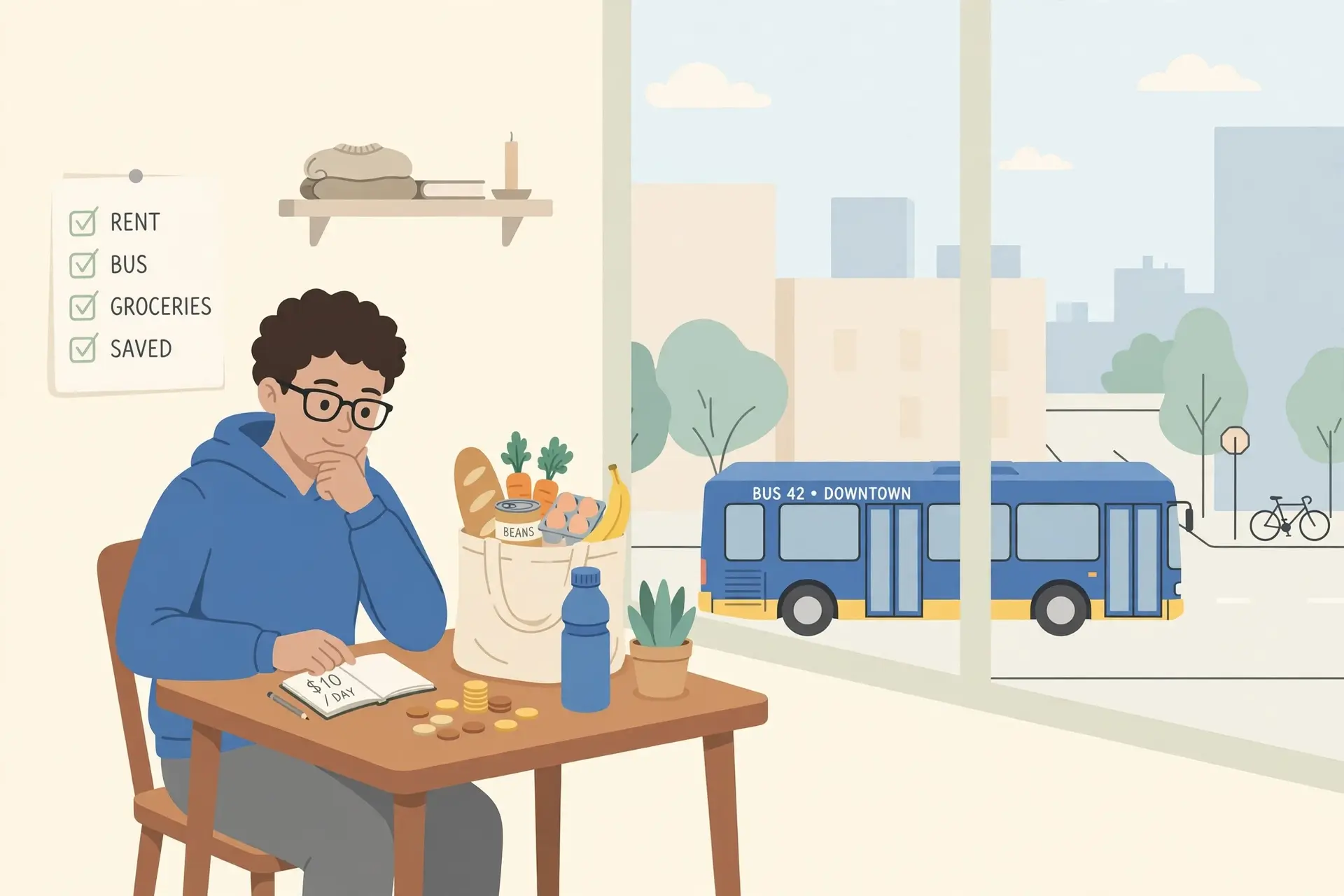
$10 a day equals about $300 in a 30-day month, or $3,650 over a full year. In the U.S., that amount is not enough for most people to pay market-rate rent and cover ordinary living expenses. It may help cover a limited set of costs if housing, healthcare or other major expenses are already paid by someone else.
To understand what the budget can realistically do, it helps to separate everyday spending from the major costs that determine whether a person can afford to live independently.
The short answer: Living on $10 a day may be possible for selected expenses when housing is already covered, but it is generally not a realistic all-inclusive budget for independent living in the United States in 2026.
1. What Does $10 a Day Really Mean?
A daily budget is easier to understand when it is converted into a monthly and yearly figure. However, these totals assume the full amount is available every day, with no deductions for emergencies or unexpected bills.
The biggest limitation is that the budget has very little flexibility. One prescription, an unexpected bus journey, a replacement pair of shoes or a utility bill can disrupt the entire month.
It is also important to distinguish between spending $10 per day and earning $10 per day. Take-home income can be lower than gross earnings after taxes and other deductions, while living expenses continue even on days when someone cannot work.
2. Housing Is the Biggest Obstacle
For most households, housing is one of the largest recurring expenses. Rent, electricity, heating, water and internet can consume far more than $300 a month, depending on the city, property and household arrangement.
That is why a $10-a-day plan usually cannot work as a complete independent living budget. Even a low-cost room may exceed the entire monthly allowance before food or transportation is considered.
When might the budget be possible?
- You live with family and do not pay rent.
- Your housing is provided through a support programme or another arrangement.
- You are temporarily budgeting only for food and a few personal expenses.
- Some essential bills are paid separately and are not included in the $10.
These situations do not mean that living costs have disappeared. They mean that another person, institution or programme is covering some of them. Any honest budget should identify those costs rather than leave them out of the calculation.
For location-specific rental benchmarks, consult the U.S. Department of Housing and Urban Development’s Fair Market Rent data. Rent figures vary by location and applicable data year.
3. Can You Afford Food on $10 a Day?
Food is one of the expenses people can sometimes control, but cutting the food budget too far can make it difficult to obtain enough calories, protein, vitamins and minerals.
Cooking at home, planning meals and choosing ingredients that can be used in several dishes can help. Depending on local prices and dietary needs, lower-cost staples may include oats, rice, beans, lentils, eggs, frozen vegetables and seasonal produce.
Practical ways to lower grocery spending
- Plan meals before shopping and make a list.
- Compare unit prices rather than looking only at package prices.
- Use beans, lentils and other affordable protein sources where suitable.
- Buy frozen vegetables when they are cheaper than fresh alternatives.
- Reduce food waste by freezing extra portions and using leftovers safely.
- Compare supermarket prices and check legitimate local food assistance.
Important: There is no single grocery figure that works for every American. Food prices, age, dietary requirements, disability, kitchen access and household size all affect the amount required.
The U.S. Department of Agriculture publishes food-plan estimates and related information through its
Center for Nutrition Policy and Promotion
. These estimates are useful reference points, not guarantees that every person can buy an adequate diet for the same amount.4. Transportation, Phone and Everyday Essentials
Small expenses can quickly consume a limited budget. A monthly transit pass, occasional rides, mobile service, laundry, toiletries and medicine all compete for the same dollars.
Transportation
Public transportation can cost less than owning a car, but availability and prices vary significantly. Some communities have limited bus or rail service, making a car necessary for work, healthcare or shopping.
Phone and internet
A low-cost phone plan may help reduce monthly spending. Eligible consumers may also qualify for the U.S. Federal Communications Commission’s Lifeline programme, subject to its eligibility rules and participating providers.
Do not rely on the former Affordable Connectivity Program (ACP) as a currently available benefit: that programme ended in 2024.
Healthcare and unexpected costs
A budget that includes only groceries and transportation can appear workable until someone needs medical care, prescription medicine, work clothing or emergency repairs. These costs are not optional for everyone, and they should not be treated as if they will never occur.
5. An Illustrative $300 Monthly Budget
The table below demonstrates how a person might divide $300 among a few expenses if housing is already covered. These are example allocations, not verified national averages or a guarantee that the amounts will be sufficient in a particular city.
| Expense | Illustrative monthly amount | What it assumes |
|---|---|---|
| Groceries | $210 | Very careful shopping and meal planning |
| Phone | $15 | A low-cost plan is available |
| Transportation | $30 | Very limited travel or another transport subsidy |
| Laundry and toiletries | $25 | Basic personal essentials only |
| Utility contribution | $20 | Most household costs are paid separately |
| Total | $300 | Housing and major bills excluded |
This is an arithmetic example, not a recommended budget. The grocery allocation may be inadequate for some people, and the transportation, phone and utility amounts may not match local prices. Medical costs, clothing, debt payments, childcare, savings and emergencies are not included.
The table illustrates the central issue: even when the figures add up to $300, that does not prove the budget is sufficient for a healthy or secure life. A realistic plan must be tested against actual local prices and personal needs.
6. Why Your Location Matters
The cost of living differs widely across the United States. Housing, transportation, food and utility expenses can change substantially between metropolitan areas, smaller cities and rural communities.
Lower rent in one area may come with fewer job opportunities or a need to drive longer distances. A city with better public transportation may reduce the need for a car but have much higher housing costs.
Before committing to a strict budget, check the actual prices of:
- A room or shared accommodation in the area.
- Groceries for the meals you normally eat.
- Local bus, train or other transportation fares.
- Electricity, heating, water and internet.
- Health insurance, prescriptions and other necessary care.
National averages can offer context, but your local costs are more useful when deciding whether a particular budget will work.
7. Government Benefits and Community Assistance
People facing financial hardship may be eligible for government benefits or community services. Eligibility depends on factors such as income, household size, immigration or residency rules where applicable, state policy and individual circumstances.
Food assistance
The Supplemental Nutrition Assistance Program (SNAP) helps eligible households purchase food. Benefit amounts and eligibility are not the same for everyone. Check the official
USDA SNAP information page
and your state’s application process.Healthcare coverage
Medicaid provides health coverage to eligible people under federal and state rules. Eligibility and coverage vary by state and personal circumstances. Review the official Medicaid website rather than assuming that low income automatically guarantees eligibility.
Help with utility bills
The Low Income Home Energy Assistance Program (LIHEAP) may help eligible households with certain energy costs. Funding and application procedures vary by location. Information is available from the official LIHEAP programme page.
Other possible resources
- Local food banks and community meal programmes.
- Housing assistance programmes and local housing agencies.
- Community health centres and eligible healthcare assistance.
- Workforce services, employment support and benefits counselling.
Use official government or established local nonprofit resources to verify eligibility. Avoid anyone who promises guaranteed benefits in exchange for an upfront fee or sensitive personal information.
8. How to Make a Limited Budget Go Further
Track every expense
Record spending for at least two to four weeks. Separate fixed bills, necessary variable expenses and optional purchases. This helps reveal where reductions are possible without sacrificing essential needs.
Build meals around a plan
Choose several inexpensive meals, compare prices and use overlapping ingredients. A meal plan can reduce waste, but it should still provide adequate nutrition and account for allergies or medical dietary needs.
Reduce recurring charges
Review subscriptions, bank fees, mobile plans and other recurring payments. Cancel services you do not need, and compare alternatives before switching. Check contract terms and cancellation charges first.
Use community resources early
If food, housing or utility payments are becoming difficult, contact legitimate assistance providers before the situation becomes urgent. Support may take time to arrange, and eligibility is not guaranteed.
Keep an emergency allowance when possible
Even a small reserve can help cover an unexpected journey, essential household item or urgent expense. If every dollar is already committed to necessities, that is a sign the budget may be too tight to remain sustainable.
9. How Does $10 a Day Compare With U.S. Poverty Guidelines?
A useful reference is the U.S. Department of Health and Human Services (HHS) poverty guidelines. For 2026, the guideline for a one-person household in the 48 contiguous states and Washington, D.C., is $15,960 per year. That is about $43.73 per day when divided by 365.
By comparison, $10 per day adds up to $3,650 per year. It is therefore far below that one-person annual guideline.
Important distinction: HHS poverty guidelines are used for determining eligibility in certain programmes. They are not the same measure as the U.S. Census Bureau’s official poverty thresholds. The guideline also differs for Alaska, Hawaii and larger household sizes.
Check the official HHS poverty guidelines for the applicable year and household size before using the figures to assess programme eligibility.
10. Final Verdict: Is $10 a Day Enough?
For most people in the United States, $10 a day is not enough to cover all ordinary living expenses independently in 2026. The amount may cover a limited set of expenses when housing and other major costs are paid separately, but it leaves little or no room for healthcare, emergencies, clothing or savings.
The key question is not simply whether someone can spend only $10 today. It is whether they can maintain adequate food, safe housing, healthcare and transportation over time without falling behind on essential bills.
If you are planning a real budget, start with your location, housing situation, household size and unavoidable expenses. Then compare the remaining amount with actual local prices and any assistance for which you may qualify.
Frequently Asked Questions
Can a person live on $10 a day in America?
It may be possible to cover selected expenses if housing and major bills are already paid. For most people, $10 a day is not enough to cover rent, food, transportation, healthcare and other necessities independently.
How much is $10 a day per month?
It equals $300 over a 30-day month. Over a 31-day month, it equals $310. The annual total is $3,650.
Can $300 a month cover groceries in the U.S.?
It depends on local prices, household size, dietary needs and access to cooking facilities. A $300 grocery budget may be restrictive for some people, and it does not cover rent, transportation or other bills.
What is the biggest obstacle to living on $10 a day?
Housing is usually the most significant obstacle. Rent and related housing costs can exceed the entire $300 monthly budget before food and other essentials are considered.
Can government assistance help reduce living costs?
Eligible people may qualify for programmes such as SNAP, Medicaid, LIHEAP or local housing and food assistance. Requirements vary by programme, state and personal circumstances, so eligibility should be checked through official sources.
Is $10 a day below the 2026 U.S. poverty guideline?
Yes. $10 a day is $3,650 per year, below the 2026 HHS poverty guideline of $15,960 for a one-person household in the 48 contiguous states and Washington, D.C. The guideline is a programme-related measure and is not identical to the Census Bureau’s poverty threshold.
Sources and Further Reading
The following official resources provide additional information about poverty guidelines, food assistance, housing costs, healthcare and utility support. Programme rules and cost estimates may change, so consult the relevant source for the latest details.