

Why Can’t I Remember My Childhood? The Science Explained childhood amnesia
Table of Contents
- Introduction: The Strange Gap in Your Timeline
- What Is Childhood Amnesia?
- 7 Scientific Reasons You Can’t Remember Early Childhood
- Reason 1: Your Hippocampus Was Under Construction
- Reason 2: You Didn’t Have Language to Tag Memories
- Reason 3: No Sense of Self = No Memory Anchor
- Reason 4: Synaptic Pruning in the Brain
- Reason 5: Memories Are Stored Differently in Childhood
- Reason 6: You Didn’t Rehearse Them Enough
- Reason 7: Mental Health & Development Factors
- “But My Friend Remembers Being 2!”
- Can You Get Childhood Memories Back?
- When Should You Be Concerned?
- How to Help Kids Form Stronger Memories
- Conclusion: Your Brain Didn’t Fail You
- FAQ
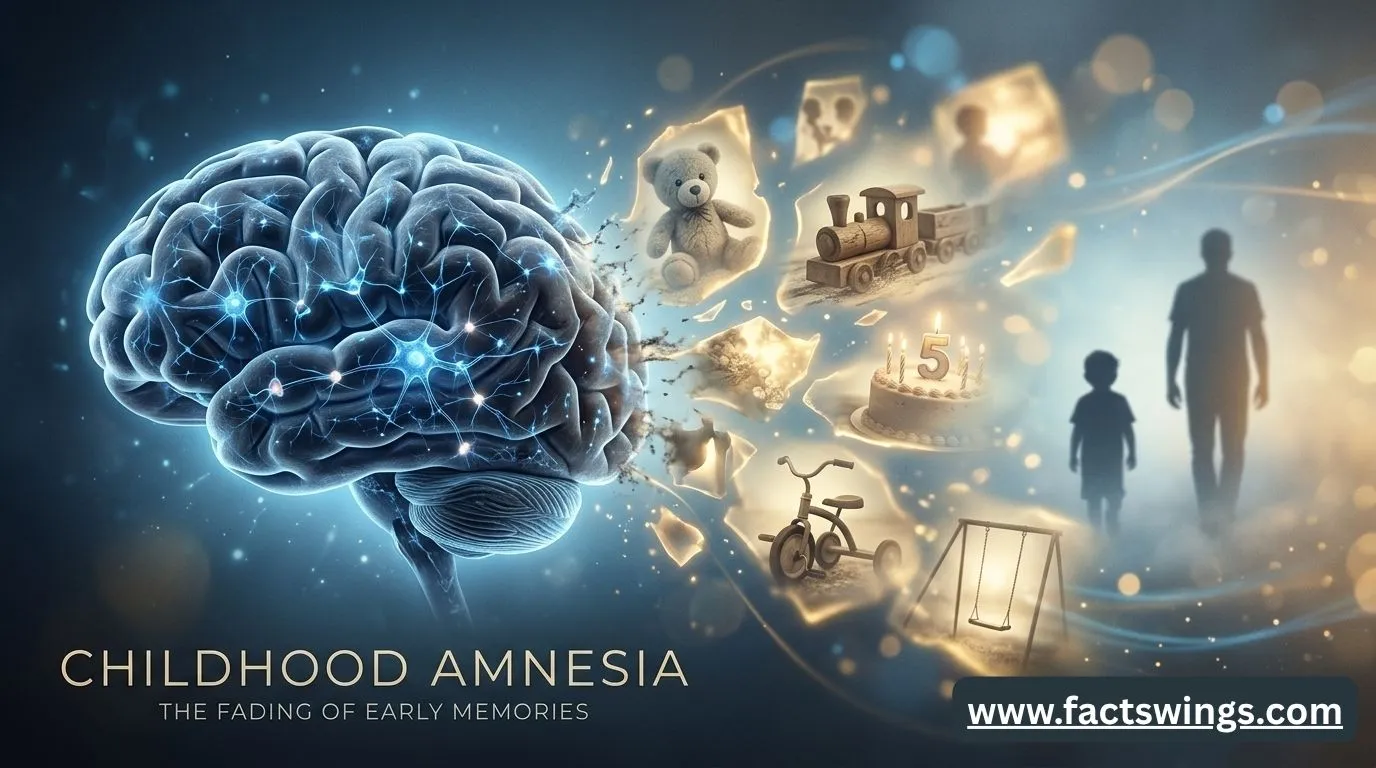
Introduction: The Strange Gap in Your Timeline
Try this experiment right now: think back to your earliest memory.
For most of us, that memory lands somewhere between age 3–7. Before that? It feels like a blank space. You know you existed. There are photos of you as a toddler, videos of your 2nd birthday, stories your parents tell. But you don’t remember any of it firsthand.
If you’ve ever wondered “Why can’t I remember my childhood?” — especially your early childhood — you’re experiencing something scientists call childhood amnesia or infantile amnesia. And you’re definitely not broken.
Roughly 100% of adults can’t remember their birth or infancy, and most of us lose almost everything before age 3. This isn’t a personal failing of your memory. It’s how human brains are built.
So what’s going on? Why does your brain record 2026 in HD but delete 2008? Let’s dig into the neuroscience, psychology, and surprising reasons your earliest years go missing.
1. What Is Childhood Amnesia? The Official Definition
Childhood amnesia is the inability of adults to recall episodic memories — specific events, places, emotions — from the first 2–4 years of life.
Coined by Sigmund Freud in 1899, he originally thought we repress early memories because they’re traumatic. Modern neuroscience has a different answer: your brain literally wasn’t wired to save them long-term yet.
Key stats to know:
- Age 0–2: Almost zero adults have reliable episodic memories
- Age 3–4: ~5–7% of memories stick, but they’re hazy and fragmented
- Age 5–7: Stable long-term memories start forming
- Age 10+: Memory becomes adult-like in structure
So if you remember 4th grade but not preschool, that’s completely normal.
2. 7 Scientific Reasons You Can’t Remember Early Childhood
Reason 1: Your Hippocampus Was Under Construction
The hippocampus is your brain’s “save button” for episodic memories.
It is not fully developed until age 4–7. In early childhood, it is still undergoing intense neurogenesis, which actually replaces and overwrites older memory traces.
A 2021 University of Toronto study found that rapid neurogenesis can erase existing memories to make room for new learning.
👉 Your brain chose skills over snapshots.
Reason 2: You Didn’t Have Language to Tag Memories
Before age 2–3, children lack the language to structure experiences into stories.
Without words like “yesterday” or “birthday,” your brain cannot properly encode memories in a retrievable format.
Research shows children with earlier language development tend to form earlier memories.
Reason 3: No Sense of Self = No Memory Anchor
Autobiographical memory requires a “self” — someone who experiences the event.
The mirror test shows self-recognition emerges around 18–24 months. Before that, there is no stable “I” to attach memories to.
Reason 4: Synaptic Pruning (Brain Clean-Up Mode)
Between ages 2–10, the brain removes unused neural connections.
Like deleting unused apps on a phone, weak or unimportant memories are removed unless reinforced or emotionally significant.
Reason 5: Early Memories Are Stored Differently
Early memories are sensory and emotional rather than narrative.
Adult memory systems search for structured stories. If none exist, the memory cannot be retrieved properly.
That is why smells or sounds sometimes trigger vague childhood feelings.
Reason 6: You Didn’t Rehearse Them Enough
Memory strengthens through repetition.
If no one repeatedly told or recalled your early experiences, those memories were never reinforced and faded.
Reason 7: Trauma, Stress, or ADHD Can Affect Memory
Some conditions can widen memory gaps:
- Childhood trauma → dissociation
- Chronic stress → hippocampal damage
- ADHD → weaker encoding
- Depression/anxiety → fewer detailed memories
- Poor childhood sleep → weak consolidation
Important: Not remembering childhood does NOT automatically mean trauma.
📌 Read more: 100 Interesting Facts That Everyone Should Know
3. “But My Friend Remembers Being 2!” — Is That Real?
Probably not fully accurate.
Common explanations:
- Family stories turning into false memories
- One-image “snapshots” mistaken for real events
- Rare HSAM cases (<100 confirmed worldwide)
Studies show many “age 2 memories” are actually reconstructed later.
4. Can You Get Childhood Memories Back?
Science says: not really.
If a memory was never properly stored, it cannot be recovered.
However, you can:
- Trigger fragments using smells or music
- Rebuild context through family stories
- Use therapy if trauma is involved
⚠️ Hypnosis is not reliable and may create false memories.
5. When Should You Worry?
For most people, this is normal. But consult a professional if:
- You remember nothing before age 12–13
- You have large memory gaps beyond early childhood
- Memory loss includes confusion or personality changes
- You suspect trauma or dissociation
6. How Parents Can Improve Childhood Memory Formation
Neuroscience-based tips:
- Narrate daily life
- Ask children open-ended questions
- Review photos regularly
- Ensure good sleep
- Reduce chronic stress
This won’t eliminate childhood amnesia, but it can strengthen later memory formation.
7. When Should You Worry About Not Remembering?
For 95% of people, childhood amnesia is normal. Talk to a doctor or therapist if:
>>You can’t remember anything before age 12-13
>>You have large blank chunks after childhood, not just early years
>>Memory loss comes with headaches, confusion, or sudden personality changes
>>You suspect repressed trauma and it’s affecting daily life
>>You have dissociative amnesia — forgetting personal info, not just events
Conditions like concussions, epilepsy, or PTSD can cause memory gaps beyond normal childhood amnesia. When in doubt, check with a professional.
How to Help Your Own Kids Form Stronger Memories
If you’re a parent reading this, neuroscience gives us hacks:
- Narrate life as it happens: “We’re at grandma’s! You’re wearing your blue hat!” This tags events with language.
- Ask open-ended questions: Instead of “Did you have fun?”, try “What was your favorite part of the zoo?”
- Look at photos together often: Rehearsal = retention. Make it a weekly ritual.
- Prioritize sleep: Kids’ brains consolidate memories during deep sleep.
- Reduce chronic stress: Safe, calm environments help the hippocampus grow.
You won’t prevent childhood amnesia — it’s biological — but you can push the offset from age 7 closer to age 4-5.
Evolutionary Theory: Why This Might Be Useful
Some scientists believe childhood amnesia may have an evolutionary purpose.
Possible explanations include:
- The brain prioritizes learning over storage in early years
- Early memories may be unnecessary for survival
- It allows identity flexibility as you grow
In simple terms, the brain focuses on building the future rather than preserving the earliest, less useful data.
Can Childhood Memories Be Recovered?
In most cases, no.
Once early autobiographical memories are not properly encoded, they are not stored in a retrievable format.
However:
- Hypnosis and therapy cannot reliably recover true early memories
- Recalled “memories” are often reconstructed, not real
The brain does not “delete” childhood—it simply never saves it in a permanent narrative form.
Interesting Facts About Childhood Memory
- Most people have no clear memories before age 3
- Women often report slightly earlier memories than men (due to language development differences)
- Trauma can sometimes create stronger early memories, but even these may be fragmented
- Memory is highly influenced by storytelling and photos
FAQ
Why can’t I remember my childhood at all?
Because your brain, especially the hippocampus, was not fully developed enough to store long-term autobiographical memories.
Is it normal to not remember early childhood?
Yes. It is completely normal and called childhood amnesia.
At what age do memories start forming?
Most stable memories begin around age 3–5.
Are early childhood memories real?
Many early “memories” are reconstructed from stories or imagination rather than direct recall.
Conclusion: Your Brain Didn’t Fail You
Not remembering your childhood is not a flaw — it is evidence that your brain was doing exactly what it needed to do: learning language, building identity, and prioritizing survival skills over permanent storage.
Those early years still shaped you — even if you cannot replay them.
You are not missing your childhood. You are built from it.
What’s your earliest memory? Drop it in the comments — and tell me how old you were. Let’s see how our readers compare!