

Scientists Discover 115-Million-Year-Old Dinosaur Blood Traces in Fossils
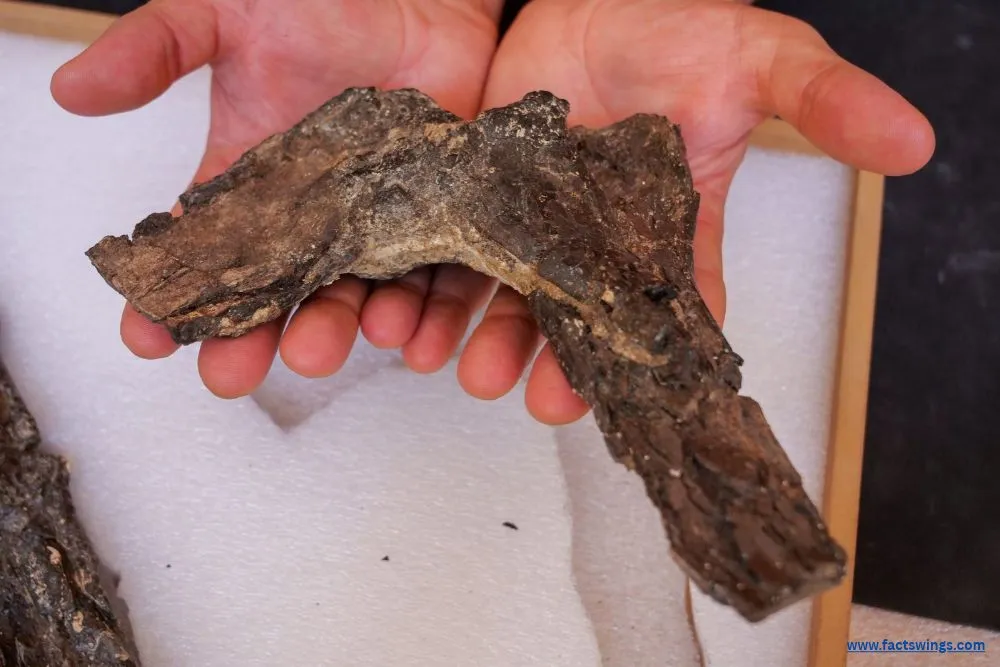
Scientists have discovered chemical traces of ancient blood inside a dinosaur fossil that is about 115 million years old. The discovery comes from a research study involving an international team of scientists. It could change how researchers understand the preservation of biological materials in ancient fossils.
The fossil belongs to a meat-eating dinosaur called Aratasaurus museunacionali. It lived in what is now northeastern Brazil during the Cretaceous Period. Researchers found microscopic structures that resemble red blood cells inside the dinosaur’s leg bones. They also detected chemical traces linked to heme, an important part of blood.
The research was led by scientists from Curtin University in Australia. Their findings were published in the scientific journal Proceedings of the National Academy of Sciences (PNAS) on November 2, 2026.
The discovery is important because scientists have long debated whether delicate biological molecules can survive inside fossils for millions of years. This study provides strong chemical evidence that some blood-related materials can remain detectable under special conditions.
Key finding: Researchers identified heme-related molecules and mineralized structures interpreted as red blood cells in the bones of a 115-million-year-old dinosaur. However, the identification of the cell-like structures still needs careful scientific evaluation.
What Did Scientists Discover in the Dinosaur Fossil?
The research team examined the limb bones of Aratasaurus museunacionali. During their investigation, they identified many tiny structures inside narrow channels in the fossilized bone.
These channels are known as vascular canals. In living animals, they contain blood vessels that carry blood through the bones and surrounding tissues.
Under microscopic examination, researchers found small structures with shapes that resemble red blood cells. The structures were preserved inside these vascular canals.
Finding cell-like structures was only one part of the discovery. The researchers also needed to investigate their chemical composition. This was important because some minerals can look similar to biological cells.
The team used different scientific methods to examine the samples. Their results showed chemical signals associated with heme and other biological materials.
The combination of microscopic structures, their location inside the bone, and the chemical evidence helped the researchers support their interpretation that the fossil contains mineralized red blood cells with traces of ancient blood.
What Is Aratasaurus museunacionali?
Aratasaurus museunacionali was a meat-eating theropod dinosaur that lived in the region that is now northeastern Brazil around 115 million years ago.
Theropods were a large group of mostly meat-eating dinosaurs. This group includes well-known dinosaurs such as Tyrannosaurus rex and Velociraptor. Modern birds also evolved from theropod dinosaurs.
The Aratasaurus fossil examined in the study came from a specimen discovered in a mine in Ceará, northeastern Brazil, in 2008. The fossil was later held in the National Museum of Brazil.
According to the research reports, the specimen was relatively small compared with many famous theropods. The individual was estimated to have been around four years old when it died.
The fossil gave scientists an opportunity to study more than the dinosaur’s bone structure. It also allowed them to investigate microscopic and chemical evidence that could provide information about the animal’s biology.
- Dinosaur: Aratasaurus museunacionali
- Age: Approximately 115 million years
- Location: Northeastern Brazil
- Fossil material: Limb bones
- Research leader: Professor Kliti Grice
- University: Curtin University
- Journal: Proceedings of the National Academy of Sciences
- Publication date: November 2, 2026
How Did Scientists Identify Ancient Blood Traces?
Identifying ancient blood inside a fossil is not a simple task. Blood and other soft biological materials normally break down after an animal dies.
Over millions of years, heat, water, microorganisms, chemical reactions, and geological changes can destroy biological structures. This makes it difficult to find reliable evidence of ancient blood.
To investigate the dinosaur fossil, the research team used several advanced scientific techniques.
1. High-Performance Liquid Chromatography and Mass Spectrometry
The researchers used high-performance liquid chromatography coupled with mass spectrometry, often called HPLC-MS.
This technique helps scientists separate and identify chemical compounds in a sample. It can detect very small amounts of specific molecules.
The analysis identified heme B and chemically altered heme-related compounds in the dinosaur bone samples. These findings provided important chemical evidence connected to ancient blood.
2. Raman Spectroscopy
The team also used Raman spectroscopy to study the chemical composition of microscopic structures.
Raman spectroscopy uses light to examine how molecules interact with light. It can help identify chemical materials without requiring large amounts of a sample.
The results showed signals associated with heme-related compounds in the structures interpreted as mineralized red blood cells.
3. Transmission Electron Microscopy
Transmission electron microscopy, or TEM, allowed researchers to examine extremely small structures at a very high level of detail.
The technique helped identify important elements, including iron, nitrogen, and carbon, within the microscopic structures.
These findings added further evidence to the researchers’ interpretation of the fossil material.
What Is Heme and Why Is It Important?
Heme is an iron-containing chemical structure found in several important biological molecules. One of its best-known roles is as part of hemoglobin, the protein found in red blood cells.
Hemoglobin helps transport oxygen through the bloodstream. It contains heme groups that bind oxygen, allowing red blood cells to carry oxygen from the lungs to different parts of the body.
Without hemoglobin, many animals would not be able to transport oxygen efficiently through their bodies.
The discovery of heme-related chemical traces in the dinosaur fossil is important because it provides evidence of ancient biological material.
It does not mean that scientists recovered a container of liquid dinosaur blood. Instead, they identified mineralized microscopic structures and chemical remains connected to the animal’s original blood.
Important distinction: Heme is not the same as a complete blood cell or an intact blood sample. The discovery involves chemically preserved blood-related traces, not fresh or liquid dinosaur blood.
How Did the Blood Traces Survive for 115 Million Years?
One of the biggest questions raised by this discovery is how such delicate biological material could survive for more than 100 million years.
The researchers believe that a special combination of burial and mineral conditions may have helped preserve the microscopic structures and their chemical components.
One mineral is especially important in this explanation. It is called hausmannite, a manganese oxide mineral.
The research team found evidence that hausmannite was associated with the preserved structures. They suggest that this mineral helped stabilize the microscopic material over a very long period.
The Role of Rapid Burial
The researchers also suggest that the dinosaur may have been buried quickly after death.
Rapid burial can protect remains from some environmental processes that normally cause decay. The research team believes that a low-oxygen environment with abundant microbial activity may have played a role in the preservation process.
These conditions may have helped create an unusual environment in which some biological structures and molecules remained detectable.
However, scientists still need to investigate exactly how these materials survived for such an extraordinary length of time.
Why Is This Discovery Important for Science?
Most dinosaur fossils provide information about the shape, size, movement, and physical structure of ancient animals.
Bones can reveal how a dinosaur grew, how it moved, and how it was related to other animals.
However, molecular evidence can provide another level of information. It may help scientists investigate the biological processes that took place inside an animal when it was alive.
The discovery of heme-related molecules in the Aratasaurus fossil could support future research into several important areas.
Understanding Ancient Physiology
Physiology is the study of how living organisms function.
Blood-related molecules may provide clues about oxygen transport and other biological processes in extinct animals.
If scientists can find and study similar materials in other fossils, they may gain a better understanding of how ancient animals functioned.
Improving Fossil Research Methods
The study also shows why researchers should examine fossils using more than traditional visual methods.
Advanced chemical and microscopic techniques may reveal biological evidence that is difficult to identify through ordinary fossil examination.
This could encourage scientists to study museum collections again using modern technology.
New Questions About Ancient Life
The research may also have an impact on astrobiology, the scientific study of life in the universe.
Scientists studying Mars and other planetary environments search for possible chemical signs of ancient life.
Understanding how biological molecules can survive under certain geological conditions on Earth may help researchers improve their methods for studying ancient materials elsewhere.
However, this dinosaur discovery does not provide evidence of life beyond Earth. It only offers information that may be useful for future research.
Interested in more scientific discoveries? Explore our Science and Discovery coverage for more stories about research, nature, and the world around us.
Are Scientists Certain That These Are Dinosaur Red Blood Cells?
Although the study presents strong chemical evidence, the interpretation of the microscopic structures has also attracted scientific discussion.
Some researchers outside the study team have raised questions about whether the structures are definitely red blood cells.
One of the scientists who expressed caution is paleontologist Mary Schweitzer. She has previously studied soft tissues and blood-vessel-like structures in dinosaur fossils.
One concern is the shape of the microscopic structures. Red blood cells in birds and reptiles contain nuclei. These cells often have a different shape from the typical red blood cells found in mammals.
Schweitzer questioned whether the structures reported in this study have the expected shape of dinosaur red blood cells. She suggested that their appearance could indicate another type of structure.
However, the chemical evidence is an important part of the discussion. The research team reported heme-related compounds in the structures and used several independent techniques to support their interpretation.
This means that the study is an important scientific finding, but further research and independent analysis will help scientists understand the evidence more fully.
Does This Mean Scientists Found Dinosaur DNA?
No. The discovery does not mean that scientists found dinosaur DNA.
The research focused on mineralized structures, heme-related molecules, and chemical traces associated with biological materials.
DNA is a different type of biological molecule. The study does not report the recovery of dinosaur DNA or an intact dinosaur genome.
It is also important to understand that finding amino acids associated with collagen does not mean scientists recovered complete collagen proteins.
The distinction matters because popular stories about ancient animals can sometimes create unrealistic expectations about what scientists have actually discovered.
For example, the discovery does not mean that scientists can bring dinosaurs back to life or recreate an extinct dinosaur using the fossil.
Could This Discovery Change Future Dinosaur Research?
The discovery may encourage scientists to investigate other fossils for traces of ancient biological materials.
Many museums and research institutions hold dinosaur fossils that were collected decades ago. Some of these fossils may contain microscopic structures that have not yet been studied using modern chemical methods.
Researchers may now have new reasons to examine these collections more closely.
Future studies could investigate whether similar preservation conditions exist in other dinosaur fossils.
Scientists may also compare different minerals, burial environments, and chemical signatures to understand which conditions help preserve biological materials over geological time.
However, one discovery cannot prove that blood-related molecules are common in dinosaur fossils. More research is needed to understand how rare this type of preservation may be.
Scientific discoveries often depend on new technologies and research methods. You can also explore more technology-related stories in our Technology section .
What Happens Next in the Research?
The discovery opens several new questions for scientists.
Researchers may investigate whether other dinosaur species also contain similar mineralized structures and heme-related chemical traces.
They may also examine how different geological environments affect the survival of biological molecules.
Another important area of research is the relationship between minerals and ancient biological structures. Understanding this relationship could help scientists identify fossils with exceptional preservation.
Future studies will also need to examine the microscopic structures independently. This will help researchers determine how confidently they can identify them as fossilized red blood cells.
For now, the Aratasaurus discovery provides an important example of how modern science can reveal information that is not visible through ordinary fossil examination.
Conclusion
The discovery of blood-related traces in a 115-million-year-old Aratasaurus fossil is an important development in paleontology.
An international research team identified mineralized structures interpreted as red blood cells and detected chemical evidence associated with heme, a key component of hemoglobin.
The researchers believe that special mineral and burial conditions helped preserve these materials over millions of years.
The discovery does not mean that scientists found liquid dinosaur blood, complete blood proteins, or dinosaur DNA. Some questions about the microscopic structures also remain open to scientific discussion.
Still, the study offers a valuable new way to investigate ancient life. It shows that fossils may preserve more biological information than scientists once expected.
As research continues, scientists may discover even more details about the biology of dinosaurs and the conditions that allow traces of ancient life to survive.
Sources and Scientific Evidence
This article is based on the published scientific research and reports from the institutions and news organizations involved in covering the discovery. The following sources provide the original research and supporting information.
Original peer-reviewed research paper: Heme Signatures in Mineralized Red Blood Cells Within Vascular Canals of a 115-Million-Year-Old Dinosaur Bone .
Official research announcement with details about the discovery, research team, fossil preservation, and scientific findings. Read the Curtin University announcement .
Independent reporting about the discovery, including scientific questions and expert discussion. Read the Reuters report .
Frequently Asked Questions (FAQ)
Researchers discovered mineralized structures interpreted as red blood cells and chemical traces of heme in a 115-million-year-old dinosaur fossil. These are ancient blood-related remains, not liquid blood.
The fossil belongs to Aratasaurus museunacionali, a meat-eating theropod dinosaur that lived in what is now northeastern Brazil.
The fossil is approximately 115 million years old and dates to the Cretaceous Period.
The fossil was discovered in a mine in Ceará, northeastern Brazil, in 2008.
Heme is an iron-containing chemical structure found in hemoglobin. Hemoglobin helps red blood cells carry oxygen through the body.
No. The study reported heme-related chemical traces and mineralized microscopic structures. It did not report the discovery of dinosaur DNA.
Researchers suggest that rapid burial, low-oxygen conditions, and the mineral hausmannite may have helped preserve the microscopic structures and their chemical components.
No. Some scientists have questioned the shape of the microscopic structures. Although the research team presents chemical evidence supporting its interpretation, further independent research may help resolve the debate.
The research paper was published online in Proceedings of the National Academy of Sciences on November 2, 2026.
Read more:




About the Author
Mehedi Hasan is the founder and editor of FactsWings.com, where he publishes well-researched articles on education, technology, AI, travel, trending news, and digital topics.
He continuously monitors official government announcements and trusted sources to keep readers informed with accurate and up-to-date information.
Website:
Home
Editorial note: FactsWings aims to present scientific research accurately. Scientific interpretations may change as new evidence becomes available. Readers should consult the original research paper for technical details.