

Future of Education
ChatGPT to Classrooms: Why AI Will Be a Core Subject by 2030
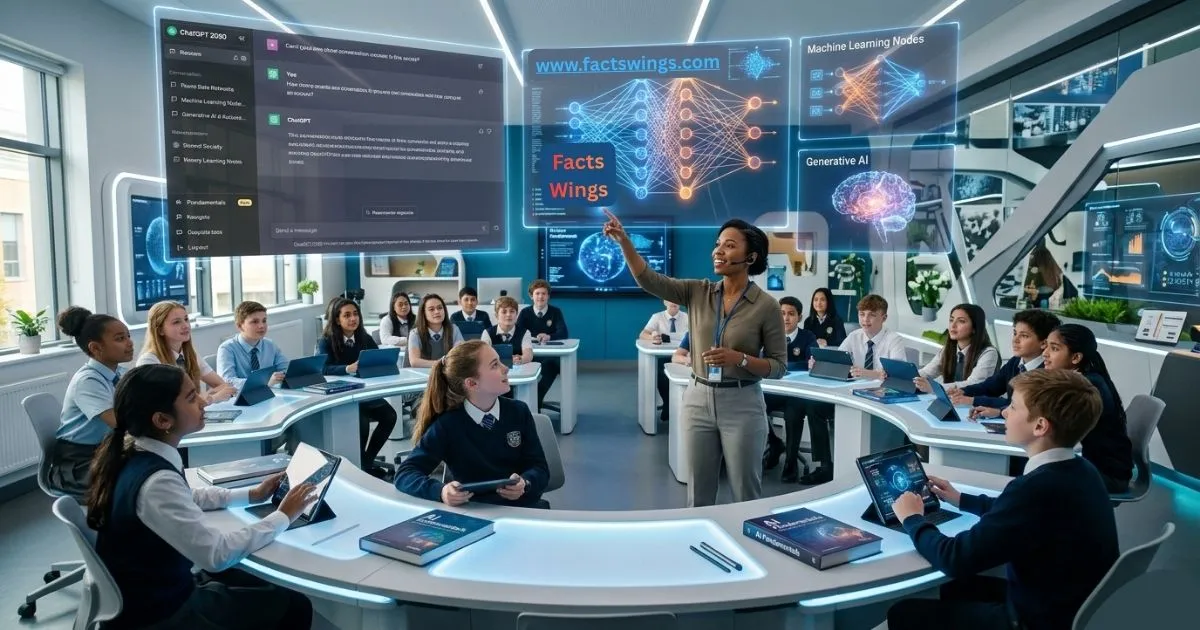
In November 2022, ChatGPT walked into education uninvited. Teachers panicked. School districts banned it. The headlines screamed about the “end of homework” and “death of critical thinking.”
Fast forward to 2026: The same tool is now on the syllabus. From GPT-10 Release in 2030: What We Know, What We Expect, and What It Means for the Future of AI to district-wide AI literacy pilots, the panic has turned into policy. And if current trends hold, by 2030 we won’t be debating *whether* to teach AI in schools. We’ll be arguing about *how* to teach it best.
This isn’t hype. This is happening. AI is becoming the new math: a foundational subject every student needs to navigate work, citizenship, and daily life. Here’s why the shift from “ChatGPT to Classrooms” is inevitable, what it will look like, and how students, parents, and schools can get ready now.
1. The ChatGPT to Classrooms Moment Changed Everything
Before ChatGPT, “AI in education” meant expensive smart boards and adaptive quizzes that few schools could afford. The barrier to entry was hardware, budget, and training. ChatGPT demolished all three overnight.
Suddenly, any student with a phone had access to a tutor, brainstorming partner, and research assistant in 100+ languages. The tool was free, required no install, and needed no training manual. Within 2 months, ChatGPT reached 100 million users【16348836503601069257†L10-L11】 — the fastest-growing consumer app in history.
Education’s first reaction was fear. New York City Public Schools banned it in January 2023. So did Los Angeles, Seattle, and universities from Sciences Po to RV University. The concern was valid: if AI can write essays, solve math problems, and explain photosynthesis, what’s left for students to do?
But banning didn’t work. Students used VPNs. Teachers found AI-generated work they couldn’t prove. And slowly, a second realization set in: If AI is this powerful outside the classroom, banning it inside the classroom is educational malpractice.
By mid-2024, UNESCO released its Guidance on Generative AI in Education and Research, urging governments not to ban, but to teach. The question shifted from “How do we stop ChatGPT?” to “How do we prepare students to use it well?”
That shift is why AI is moving from playground rumor to printed curriculum.
2. Why AI Must Be a Core Subject, Not an Elective
We’ve added new subjects before. Computer Science entered schools in the 1980s. Internet Safety in the 2000s. Digital Citizenship in the 2010s. All were treated as “specials” — important, but optional.
AI is different for 3 reasons:
Reason 1: Every Job Will Be an “AI Job” by 2030
The World Economic Forum’s Future of Jobs Report 2023 projects that 44% of workers’ core skills will be disrupted by 2027, with AI and big data as the #1 driver. But this isn’t about AI replacing jobs. It’s about AI changing every job.
Nurses will use AI to triage patients. Mechanics will use AI to diagnose engine issues. Farmers will use AI for crop prediction. Marketers, lawyers, architects, and electricians — all will prompt, verify, and collaborate with AI daily. Not knowing how to work *with* AI in 2030 will be like not knowing how to use email in 2005.
Teaching AI as an elective means only the “tech kids” learn it. Teaching it as a core subject means no one gets left behind.
Reason 2: AI Literacy = New Critical Thinking
We teach math not because every kid becomes an engineer, but because math trains logical reasoning. We teach history not to memorize dates, but to understand cause and effect.
AI demands its own form of reasoning:
- Prompt literacy: Knowing how to ask good questions to get useful answers.
- Output verification: Spotting hallucinations, bias, and errors in AI text.
- Ethical reasoning: Deciding when to use AI, when to disclose it, and when *not* to use it.
- Systems thinking: Understanding how training data shapes AI behavior.
These aren’t “tech skills.” They’re life skills. And like reading, they compound. A 5th grader who learns to critique an AI summary today becomes a voter who can spot deepfakes in 2035.
Reason 3: The Equity Gap Is Already Growing
Stanford HAI’s 2024 AI Index found that students in high-income schools are 3x more likely to receive formal AI instruction than those in low-income schools. Private schools are hiring “AI Coordinators.” Public schools are still blocking ChatGPT on Wi-Fi.
If we don’t make AI a core subject with national standards, we’ll create a new digital divide: between kids who learn to command AI, and kids who are commanded *by* it. Core curriculum is how we close that gap.
3. What “AI as a Core Subject””ChatGPT to Classrooms” Actually Looks Like in 2030
This won’t be “Python Programming for 8-Year-Olds.” Core AI curriculum is already emerging, and it looks more like social studies + computer science + philosophy combined.
Elementary School: K-5 — AI Awareness
Goal: Demystify AI. Build intuition.
- Grade 1-2: “What is a robot vs. what is AI?” using stories. Unplugged activities to show how AI learns from examples, like sorting colored blocks.
- Grade 3-4: “Talk to the Machine” — Basic prompt games. Students learn that clear instructions get better results. Compare AI poem vs. human poem.
- Grade 5: “AI in My World” — Scavenger hunt: find 5 places AI is used at home. Discuss: Should a self-driving car choose to protect passengers or pedestrians?
Middle School: 6-8 — AI Fluency
Goal: Use AI tools safely and skillfully across subjects.
- English: Use AI to brainstorm essay outlines, then write and fact-check manually. Learn to cite AI assistance.
- Science: Train a simple image model to classify leaves. Discuss dataset bias: what happens if all training photos are from one region?
- Social Studies: Analyze how AI chatbots from different countries answer the same historical question. Who decides what’s “neutral”?
- Dedicated Unit: “How AI Works” — Explain neural networks with analogies. No code required, but students can tweak a “Teachable Machine” model.
High School: 9-12 — AI Mastery + Ethics
Goal: Prepare students to build, evaluate, and govern AI.
- Year 1: AI + Data Literacy. Statistics, probability, and dataset design. Project: Audit a public dataset for bias.
- Year 2: AI + Chosen Domain. “AI for Biology,” “AI for Art,” “AI for Business.” Students complete capstone using AI in a field they care about.
- Year 3: AI Ethics & Policy. Case studies: hiring algorithms, facial recognition, autonomous weapons. Debate: Should there be an “AI driver’s license”?
- Optional AP Track: AP AI — Covers model architectures, Python, and ML math for STEM-bound students.
This model isn’t theory. Finland’s Elements of AI course is already used in schools. UAE made AI mandatory K-12 in 2023. Singapore’s “Code for Fun” program now includes AI modules at Primary 4. The blueprint exists.
4. 5 Countries Already Teaching AI as Core Curriculum
The 2030 timeline isn’t arbitrary. These nations are running the pilot for the rest of us:
| Country | What They’re Doing | Key Lesson |
|---|---|---|
| United Arab Emirates | Mandated AI for all K-12 students in 2023. 4 hours/week. Teacher training included. | Government mandate accelerates adoption. Equity requires teacher upskilling first. |
| South Korea | “AI Textbook” pilot in 2025, full rollout by 2028. Personalized AI tutors for math + English. | AI can be both *subject* and *teaching method* without conflict. |
| Finland | Elements of AI course free to all citizens. 1% of population completed it. Now in high schools. | Public + private partnership works. Start with adults, trickle to kids. |
| China | AI textbooks in 2018. 500+ high schools in “AI pilot zones.” National AI competition for teens. | Early start creates talent pipeline. 10-year-olds are training models. |
| USA | Patchwork: California passed AI literacy bill in 2024. 15+ states have K-12 AI guidelines. | Without federal standard, equity gap widens. Local districts lead. |
The takeaway: Countries that treat AI like reading and math — not like robotics club — are moving fastest. And their students will enter the 2030 workforce with a decade head start.
5. The 3 Big Challenges — And How We Solve Them
Moving AI to core curriculum isn’t easy. Here’s what keeps superintendents up at night, and what’s working:
Challenge 1: “Teachers Aren’t Ready”
The fear: 74% of teachers say they haven’t received AI PD, per a 2025 EdWeek survey. Asking them to teach AI feels unfair.
The fix: You don’t need every teacher to be an AI engineer. You need 1 AI Lead per school + embedded tools. Microsoft + Khan Academy’s Khanmigo for Teachers is a model: AI helps teachers plan AI lessons. Train-the-trainer scales faster than training everyone.
Challenge 2: “The Tech Changes Too Fast”
The fear: Why build curriculum around GPT-4 when GPT-6 drops next year?
The fix: Teach concepts, not tools. We don’t rewrite math books when calculators get faster. Core AI curriculum focuses on: What is training data? What is bias? How do you verify a claim? The tools change. The thinking doesn’t.
Challenge 3: “Parents Will Push Back”
The fear: Screen time, data privacy, “robots taking jobs” anxiety.
The fix: Transparency + opt-in projects. Show parents the curriculum. Let them see their kid isn’t “learning to code” — they’re learning to question, create, and lead. When South Korea polled parents after 1 year of AI class, 81% wanted *more* AI instruction, not less.
6. What Parents Can Do Today: The 2030 Prep Checklist
You don’t need to wait for your school district. AI literacy starts at home, and it’s not about buying a robot kit.
- Co-use AI, don’t ban it. Next time your kid has a science question, ask ChatGPT together. Then say, “How could we double-check this?” Model verification.
- Play “AI or Human?” Show them an AI image and a real photo. A ChatGPT poem and Shel Silverstein. Can they tell? Discuss what gave it away.
- Assign AI a “job” in your house. Meal plan for the week. Birthday party ideas. Let your kid prompt it, then critique the output. This is prompt engineering at age 9.
- Talk about bias early. Ask AI “draw a doctor” and count how many are male. Discuss: Why? Where did AI learn that? This is AI ethics without the textbook.
- Use free curricula now. Day of AI from MIT, Google’s Applied Digital Skills, and Common Sense Education all have K-12 AI lessons. 20 minutes/week is enough.
The goal isn’t to make your 4th grader a prompt engineer. It’s to make them AI-confident. So when AI class rolls out in 2030, they don’t fear it. They lead it.
Frequently Asked Questions
Will AI replace teachers by 2030?
No. Every major study — from OECD to Stanford HAI — finds AI works best as a “co-pilot” for teachers, not a replacement. AI handles grading, tutoring, and admin. Teachers handle motivation, mentorship, and meaning. The job changes, but it doesn’t disappear. If anything, we’ll need *more* teachers to help students navigate AI ethically.
Is my child too young to learn about AI?
If they can use YouTube Kids, they’re ready to learn *about* AI. You don’t teach calculus in kindergarten, but you teach counting. Same with AI. Age 5-7: “AI is like a parrot — it repeats patterns.” Age 8-10: “AI learns from examples, and bad examples teach bad lessons.” Age 11+: “Let’s test whether AI is fair.” The concepts scale.
What if our school doesn’t teach AI by 2030?
Then the gap is real, but not fatal. Use after-school programs, library workshops, and free online courses. Advocate at school board meetings — bring this article. The fastest way schools add AI is parent demand. In 2025, 62% of districts said “parent interest” was the #1 reason they launched AI pilots.
Will learning AI make kids worse at writing or math?
Only if we teach it wrong. Calculators didn’t kill math; they killed *drill*. AI won’t kill writing; it’ll kill the 5-paragraph essay you didn’t want to write anyway. The new bar is higher: Can you use AI to draft, then add insight only a human would have? That’s the skill colleges and employers will test in 2030.
The New Pencil
When calculators entered classrooms in the 1970s, math teachers protested. “Students won’t learn arithmetic!” they said. They were right — and wrong. Long division drills died. But math literacy soared, because students could finally tackle real problems instead of arithmetic.
ChatGPT is the new calculator. AI is the new pencil. It’s not the subject. It’s the instrument we use to learn *every* subject.
By 2030, “AI class” will sound as strange as “Pencil class.” Because AI won’t be a separate thing you study. It’ll be embedded in how you study everything. The districts that realize this first will give their kids a superpower. The ones that ban it will give their kids a handicap.
The shift from ChatGPT to Classrooms isn’t about technology. It’s about equity, agency, and preparing students for a world where the biggest disadvantage is not knowing how to ask a machine for help — and how to know when it’s lying.
The future of education isn’t Human vs AI. It’s Human + AI. And the classroom of 2030 starts today.