

TL;DR - Summary
We spent three years asking AI to write poems. Now we’re asking it to run companies. Here’s what comes after the generative AI boom — and why the next phase will be more consequential than the first.
On this page
What Comes After the AI Boom? Next Phase of AI in 2026
We spent three years asking AI to write poems. Now we’re asking it to run the company. Inside the quiet, more consequential revolution that begins where the hype ends.
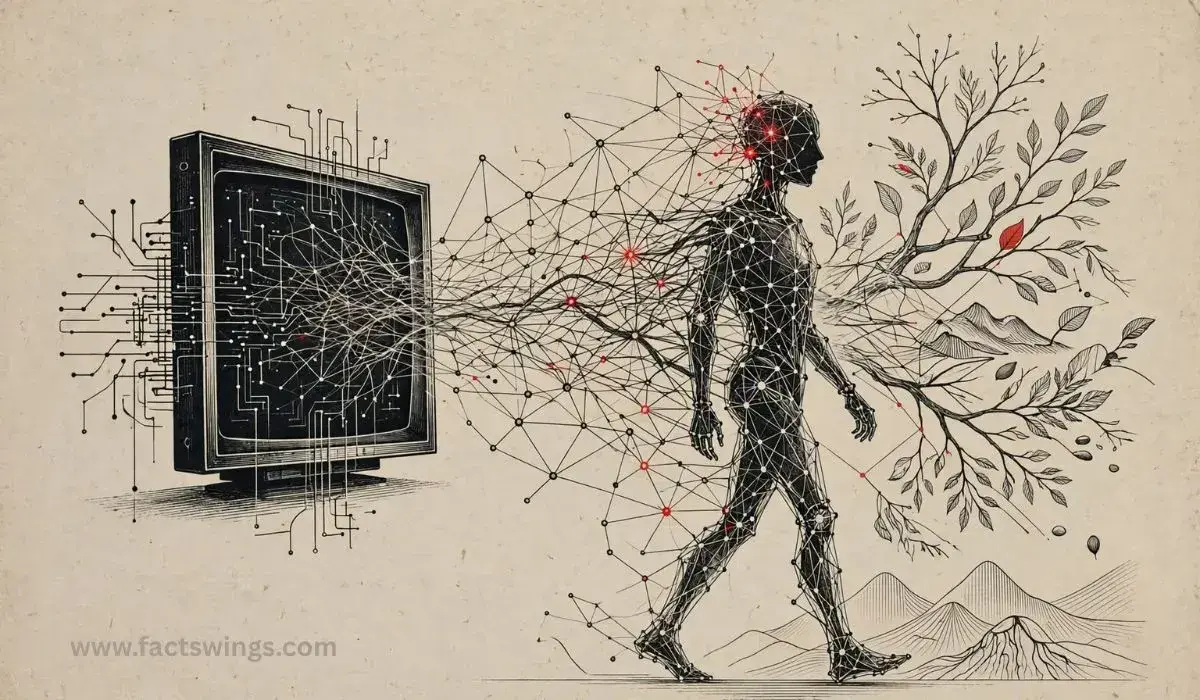
For a while, it felt like the future had already arrived. You typed a sentence, and a machine painted like Van Gogh. You whispered an idea, and it wrote code, composed a symphony, drafted a business plan. From late 2022 to early 2025, the generative AI boom gave us a collective sense of wonder we hadn’t felt since the first iPhone.
And then, almost imperceptibly, the wonder faded. The new model was only 3% better. The AI-generated ad looked a little too perfect, a little too soulless. The boardroom question changed from “How can we use AI?” to “How much is this AI actually saving us?”
Welcome to the after-party. The music hasn’t stopped, but the lights are on. What comes after the AI boom is not a crash, nor is it a straight line to superintelligence. It is something far more interesting: the moment AI stops being a spectacle and starts becoming infrastructure.
01 The Peak Has Passed
Every technological revolution follows the same emotional arc, described perfectly in the Gartner Hype Cycle. We climb the Peak of Inflated Expectations, then we slide into the Trough of Disillusionment, before we slowly climb the Slope of Enlightenment.
In 2026, we are officially in the trough. Not because AI failed, but because our expectations were god-like. We expected a single model to solve science. What we got instead is a brilliant, flawed intern who needs constant supervision.
Three quiet truths signal the end of the first act. First, the scaling laws are bending. As noted by researchers at MIT Technology Review, doubling compute no longer doubles intelligence. Second, we have exhausted the easy data. The public internet has been scraped. The next frontier is not more data, but better, private, and synthetic data. And third, as detailed in the latest Stanford AI Index, enterprise adoption has stalled at the pilot stage. Companies have 12 AI pilots and zero in production.
This is why you must understand the difference between a demo and a deployment. If you still think AI is just about chatbots, read our primer on What Happens to AI After 2030? The Next Era of AI.
02 The Age of Agents
The biggest shift of 2026The most important word in AI right now is not “generative.” It’s “agentic.”
A generative model is reactive. You prompt, it responds. An agentic system is proactive. You give it an objective — “Reduce our customer churn by 5% this quarter” — and it creates a plan, opens your analytics tools, identifies at-risk customers, drafts personalized retention offers, A/B tests them, and reports back.
This is the leap from co-pilot to colleague. The agent has memory, it has tools, it can use a browser, run code, and ask for permission when the stakes are high. In 2024, this sounded like science fiction. In 2026, it is the core product strategy of every serious AI lab.
Why now? Because language is no longer the bottleneck; reliability is. An agent that is right 95% of the time will still bankrupt you if the 5% is a mistaken $10,000 refund. The entire industry is now obsessed with one metric: reliability at scale. Companies that are mastering this are not building bigger models, but building better scaffolding — memory systems, verification loops, and human-in-the-loop checkpoints.
For business leaders, this changes everything. Learning prompt engineering was 2023. Learning The Next AI Interface May Have Arms, Legs and Eyes are the skill that will define your career in 2026.
03 Physical Intelligence
For three years, AI has been trapped behind glass. It lived on screens, in text boxes. The next phase breaks the glass.
NVIDIA CEO Jensen Huang calls it Physical AI. It is the fusion of generative intelligence with an understanding of the physical world — gravity, friction, object permanence. This is not just about robots; it is about AI that finally understands that a cup will fall if you push it off a table.
Two forces are making this real. First, humanoid robots have graduated from lab demos. Figure 02 is already working in BMW’s Spartanburg plant. Tesla’s Optimus is handling battery sorting. These robots are not programmed; they are trained by watching thousands of hours of human video. Second, we are building “world models” — AI systems that can simulate the future before acting.
The implication is profound. The first AI boom disrupted white-collar work — writers, designers, coders. The next boom will start to touch blue-collar work — warehouse operations, manufacturing, logistics. It will be slower, harder, and far more regulated, but infinitely more impactful on GDP.
04 The Small Model Revolution
We were obsessed with bigness. 1 trillion parameters. $100 million training runs. The bigger, the better.
2026 is the year we fell in love with small.
Small Language Models — SLMs with 1 to 7 billion parameters — can now run directly on your iPhone, your laptop, your car. They are faster, private, free to run, and for most daily tasks, they are good enough. Microsoft’s Phi-3, Apple’s Foundation Models, and Meta’s Llama 3.2 are proving that a focused, high-quality small model can beat a bloated large model on specific tasks.
As McKinsey’s latest State of AI report highlights, smart enterprises are adopting a hybrid architecture. They are not replacing GPT-5; they are using it only when necessary, and routing 70% of queries to cheaper, faster SLMs. This is not just a technical shift. It is an economic and privacy revolution.
05 The Great Filter of AI Boom
Every boom ends with a filter. The dot-com boom left us with Amazon and Google and buried Pets.com. The AI boom will be no different.
Today, there are over 30,000 AI startups, most of them thin wrappers around OpenAI. In the next 18 months, 90% of them will disappear. The market is ruthlessly asking three questions: Do you own proprietary data? Do you own distribution? Can you prove 10x ROI, not just a cool demo?
Add regulation to that. The EU AI Act is now enforced. The US AI Safety Institute is auditing frontier models. The “move fast and break things” era of AI is officially over. The winners of the next phase will not be the fastest, but the most trustworthy, auditable, and profitable.
06 A Playbook for What’s Next
So what should you actually do? The playbook is changing.
If you run a business: Stop collecting AI tools. Start building AI employees. Pick one painful, expensive workflow — support, reconciliation, onboarding — and automate it 100% with agents.
If you are a creator: The market for generic AI content is dead. The market for AI orchestration is booming. Companies will pay $10k/month not for AI images, but for someone who can build a system that generates, posts, and optimizes their entire content pipeline.
If you are building a career: Your job won’t be taken by AI. It will be taken by a 24-year-old who manages a fleet of 15 AI agents while you are still prompting one chatbot at a time.
The ai boom is over. The build-out has just begun. And this time, it won’t be about what AI can say. It will be about what it can do when you’re not watching.
The AI After-Bloom Brief
One email every Monday. No hype. We track Agentic AI, Physical AI & SLMs — so you don’t have to scroll.

Md. Mehedi Hasan — Staff Writer, Future Desk
Mehedi Hasan is the founder and editor of FactsWings.com, where he publishes well-researched articles on education, technology, AI, travel, trending news and digital topics. All stories by Mehedi →
FAQ
Is the AI boom really over?
Not over — just maturing. The hype phase of text-to-image and chatbots is peaking. The investment and talent are moving to more durable, profitable layers: AI agents that act, Physical AI that moves, and small models that live on your device.
What’s the difference between generative AI and agentic AI?
Generative AI creates content when you ask. Agentic AI pursues a goal. It plans, uses tools, remembers context, and executes multi-step tasks autonomously, checking in with a human only when necessary.
What is Physical AI?
It’s AI that understands the laws of the physical world — gravity, space, cause and effect — to power robots, self-driving cars, and smart factories. It’s AI leaving the chat window and entering the real world.
Will small models replace GPT-5 and Claude?
No. They will complement them. Think hybrid: small, private models on your phone handle 80% of fast tasks. Large frontier models in the cloud handle the 20% that needs deep reasoning. It’s like having both a bicycle and a jet.

Mehedi Hasan - Tech & AI Researcher
Md. Mehedi Hasan is the founder and editor of FactsWings. Passionate about AI, technology, science, cybersecurity, and fact-based journalism. Dedicated to publishing accurate and trustworthy content for a global audience.
View all posts →Frequently Asked Questions
Are these facts verified?
Yes, every fact is fact-checked from primary sources like NASA, BBC, Nature, and peer-reviewed papers.
Do you use AI to write?
No. All articles are human-written and human fact-checked. We disclose affiliate links per FTC guidelines.