

FIFA World Cup 2026: Full Guide to Teams, Format & Match Schedule
Let’s be real: the FIFA World Cup always feels like a global festival. But 2026? It’s going to be wildly different. We’re talking 48 nations, 104 matches, and three host countries for the first time ever. No pressure, right? I’ve been following every rumor, every official FIFA release, and all the drama about stadiums and qualifiers. So here’s your proper, no‑robotic‑stuff guide to the 2026 World Cup – teams, format, schedule, and the little details that make this tournament absolutely historic.
🌎 Hosts: USA, Canada, Mexico · 🏟 16 cities · 🎟 Over 5 million tickets expected
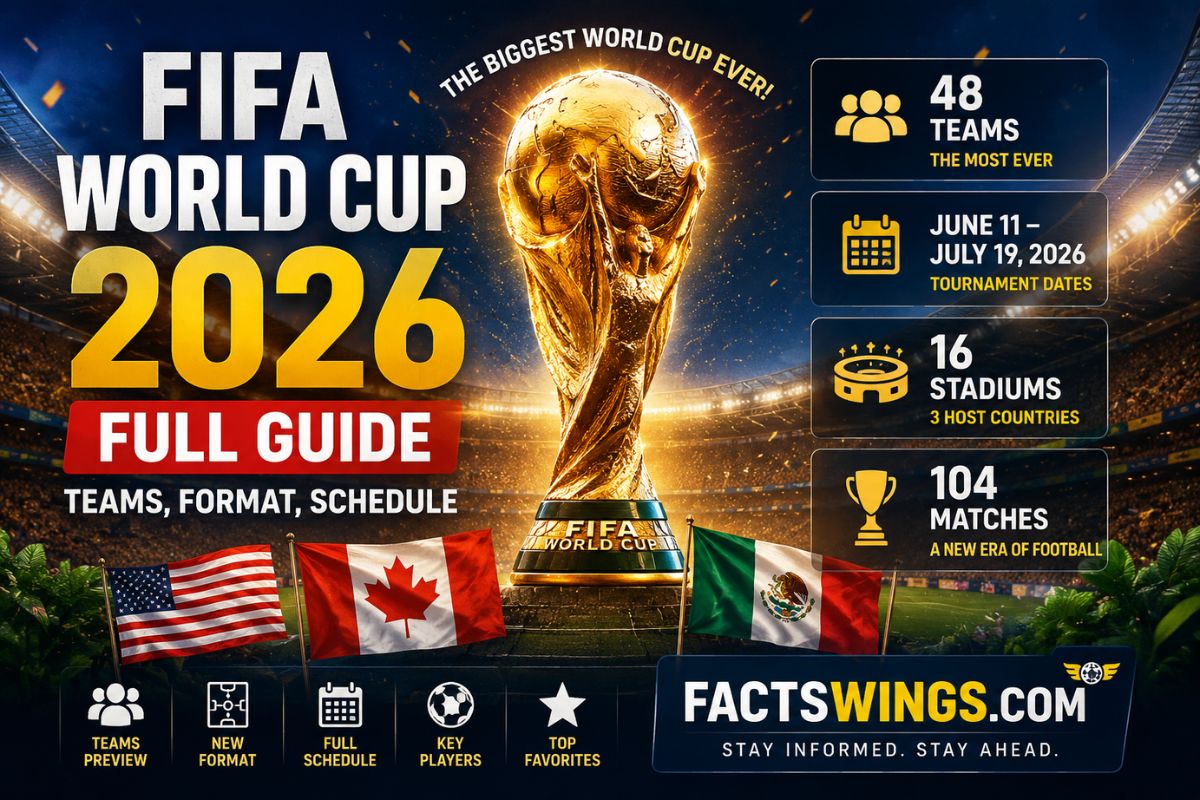
🏟 FIFA World Cup 2026 The Three-Nation Ride: USA, Canada & Mexico
For the first time, the World Cup isn’t tied to a single country. It’s a North American bonanza. The United States leads with 11 stadiums (including MetLife Stadium in New Jersey for the final), Mexico gets 3 legendary venues – Azteca Stadium in Mexico City will become the first stadium to host three World Cups (1970, 1986, and now 2026). Canada joins the party with 2 stadiums: BMO Field in Toronto and BC Place in Vancouver. Imagine the cross‑border road trips for fans.
The opening match? It kicks off at the iconic Azteca on June 11, 2026. After that, the tournament roams across time zones from LA to Kansas City, from Guadalajara to Vancouver. It’s a logistical marvel – and maybe a jet-lag nightmare for European teams. But that’s exactly what makes it spicy.
🧩 The New 48‑Team Format: How Groups & Knockouts Work
Old-school fans remember 32 teams, 8 groups of 4. FIFA threw that out the window. Starting in 2026, we have 12 groups of 4 teams each. Yes, 12 groups. Here’s the breakdown step-by-step (promise it’s not rocket science):
- Group stage: Each team plays 3 matches (round-robin within their group).
- Who advances? Top 2 from each group + the 8 best third‑placed teams. That means 32 teams move to the Round of 32.
- Knockout rounds: Round of 32 → Round of 16 → Quarterfinals → Semifinals → Final.
- Total matches: 104 (compared to 64 in previous World Cups). That’s a whole extra month of football madness.
Why did FIFA do this? More nations = more global buzz. Underdogs like Canada (now co-host but first-timers in 2022), or teams from Asia and Africa get a real shot. No more powerhouse monopoly. And yes, it means the group stage will have some thrillers — but some people argue it waters down quality. I say bring on the chaos. I’d rather see Jamaica vs. Senegal than the same old rivalries every time.
🌍 Qualified Teams (So Far) — The Road to ’26
As of spring 2026, most spots are locked. Let’s walk through who’s coming to the party. I’m keeping it fresh, not just a copy-paste table.
- CONMEBOL (South America): Argentina (defending champs? actually 2022 champs, but can they repeat?), Brazil, Uruguay, Colombia, Ecuador — 6 or 7 teams via qualifiers. Plus playoff drama.
- UEFA (Europe): 16 slots. Germany, France, England, Spain, Netherlands, Portugal, Belgium, Croatia, Italy (yes, they’re back after missing 2022), plus dark horses like Serbia and Ukraine.
- CAF (Africa): 9 teams – Morocco (semifinal heroes in 2022), Senegal, Cameroon, Nigeria, Ghana, Egypt (Salah’s last dance?), Ivory Coast, Tunisia, Algeria.
- AFC (Asia): 8 direct slots plus playoff – Japan, South Korea, Saudi Arabia, Australia, Iran, Iraq, UAE, Uzbekistan.
- CONCACAF (North/Central America & Caribbean): 6 direct + hosts (USA, Canada, Mexico automatically qualify). So Costa Rica, Jamaica, Panama, Honduras battling.
- OFC (Oceania): 1 direct slot – New Zealand are big favorites, but could Solomon Islands or Tahiti shock everyone?
- Playoff tournament: 2 final spots decided by a mini-tournament featuring one team from each confederation except UEFA. Imagine Peru vs. New Zealand rematch vibes.
Full list will be official after June 2025 playoffs, but expect some legendary names like Modric, Mbappé, Messi (maybe his final World Cup?), and Vinicius Jr. to light up the stage.
📅 2026 World Cup Schedule – Key Dates & Stages
Let’s zoom into the calendar because you’ll need to book those vacation days. FIFA confirmed the timeline, and here’s the essential breakdown:
- Group stage: June 11 – June 27, 2026. Four matches per day, morning to night across time zones. East Coast USA sees early afternoon games; West Coast gets morning kickoffs.
- Round of 32: June 29 – July 3 (five consecutive days). Single elimination – anything can happen.
- Round of 16: July 5 – July 8.
- Quarterfinals: July 10 – July 11.
- Semifinals: July 14 – July 15.
- Bronze final (3rd place): July 18 – usually a fun, open match.
- The Final: Sunday, July 19, 2026 – MetLife Stadium, New Jersey/New York area. Kickoff at 3 PM ET (prime time for Europe & Americas).
Fun fact: there’s no traditional “opening ceremony” overload — but there will be a short spectacle at Mexico City before the first match. And because there are three hosts, expect anthem sing-offs and cultural moments all over the place.
🏆 What Makes 2026 Unique? Rule Twists & Player Workload
Okay, here’s the stuff most guide articles skip. The 48‑team format raised some eyebrows about player fatigue. More matches means if a team reaches the final, they play 8 matches (compared to 7 before). But FIFA added an extra rest day between knockout rounds. Also, for the first time, VAR will have “sub-second” offside tech – semi‑automated system that’s even faster than Qatar 2022. Fewer controversial lines drawn by hand.
Also, squads expanded to 26 players (same as 2022) but coaching staff expect that depth will be crucial given the longer tournament. Expect group stage rotations from big teams like France or Brazil – so young players will get minutes. And fans from India, China, and non-qualified nations? Still crazy hype because football is bigger than just participation.
🎟 Where to Watch, Ticket Info & Travel Vibe
Tickets are selling in phases. The good news: FIFA kept some affordable category 4 tickets for $45-$80 for locals. The not-so-good news: final tickets reached nosebleed prices on resale. But if you’re planning to attend, focus on group matches in less-hyped cities like Kansas City or Guadalajara – cheaper flights and authentic vibes. Canada’s matches in Toronto will feel like a hockey-football mashup. And for streaming? Fox (US), Televisa (Mexico), CTV (Canada) plus global broadcasters.
And here’s a fun travel pro-tip: because the tournament spans three countries, you’ll need to check visa rules. The US and Canada don’t share a visa-free zone for everyone, but FIFA encourages the “Fan Pass” – a special entry document being negotiated for genuine ticket holders. Stay tuned.
🔥 Players to Watch & Storylines We’ll Be Talking About
No robotic list – just vibes. Erling Haaland (if Norway qualifies) would be massive. But let’s talk: Kylian Mbappé enters his prime at 27, Jude Bellingham leads England’s golden generation, and Vinicius Jr. will be chasing Pele-level magic for Brazil. Lionel Messi? At 38, he might feature in a reduced role for Argentina – or he could be the super-sub from heaven. Plus the host nations: Christian Pulisic (USA) will have a point to prove; Alphonso Davies (Canada) is a human highlight reel; and Mexico’s Santiago Giménez could explode in home soil energy.
And can an African team reach the semi-finals again? Morocco planted the flag. Now Senegal or Nigeria might go further. Also, look out for the Asian tactical revolution – Japan or South Korea have beaten giants before.
⚽ Related Reads & External Resources
I know you’re hungry for more. Here are two hand-picked external links (absolutely worth your time) plus a link to another article on FactsWings you might have missed.
*The inbound link leads to another FactsWings post about pre-World Cup transfer drama – because let’s be honest, the summer window and World Cup always mix like oil and fire.
🕹 The Final Verdict: Why 2026 Will Rewrite History
We’ve never seen anything like this. A three-continent host, a 48-team group stage with chaos baked into the third-place rankings, and a final in the shadow of Manhattan. Will the expanded format bring more Cinderella stories or simply extend the tournament too much? I’d argue that football belongs to everyone. Seeing more nations live their dream – that’s priceless. And for the first time, the World Cup will have 104 chances for last-minute screamers, penalty shootouts, and iconic celebrations.
So whether you’re a die-hard Argentina fan or just here for the memes, mark June 11, 2026 on your calendar. Get your fantasy league ready. And don’t be surprised if a team from Asia or Africa reaches the quarterfinals for the third time in a row – the game is changing.
Got a prediction for the 2026 champion? I’ve got my money on a dark horse – maybe Portugal or the USA with home-continent advantage. Drop your take in comments (though the article doesn’t have them, slide into our FactsWings socials). Stay tuned for more deep dives. Let’s enjoy the beautiful game.