

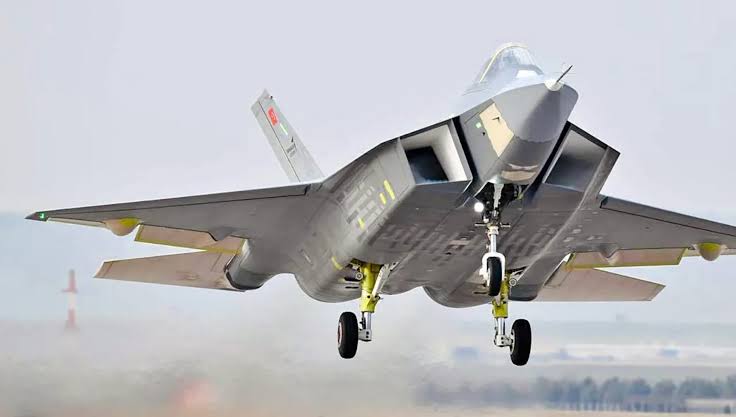
Picture: F-35 Lightning Aircraft
F-35 Lightning II: The Stealth Fighter Changing Modern Warfare
Introduction
The F-35 Lightning II is a fifth-generation multirole stealth fighter jet developed by Lockheed Martin. Known for its advanced stealth, integrated avionics, and superior situational awareness, the F-35 is considered one of the most advanced aircraft in the world today. It’s not just a fighter jet — it’s a flying computer, battlefield sensor, and force multiplier.
History and Development
The F-35 program was initiated under the Joint Strike Fighter (JSF) project, aiming to produce a versatile aircraft for multiple branches of the U.S. military and allied forces. The first flight of the F-35A took place in 2006, and the aircraft entered service in 2015.
The program was one of the costliest defense projects in history, with over $1.5 trillion estimated in lifecycle costs. Despite controversies surrounding cost and delays, the F-35 has gradually become the cornerstone of many modern air forces.
Variants of the F-35
- F-35A: Conventional takeoff and landing (CTOL) version used primarily by the U.S. Air Force.
- F-35B: Short takeoff and vertical landing (STOVL) variant used by the U.S. Marine Corps and the Royal Navy.
- F-35C: Carrier-based variant with larger wings and reinforced landing gear for the U.S. Navy.
Stealth and Avionics
The F-35’s stealth design allows it to evade radar detection and operate in contested environments. It incorporates radar-absorbing materials, internal weapons bays, and an angular body structure that minimizes radar cross-section.
Its avionics suite is unmatched, featuring advanced sensors, data fusion, and helmet-mounted displays. The pilot gets a complete 360-degree view of the battlefield through the Distributed Aperture System (DAS), allowing enhanced targeting and threat detection.
Power and Performance
The F-35 is powered by a single Pratt & Whitney F135 engine, capable of producing over 43,000 pounds of thrust. It can fly at a top speed of Mach 1.6 (about 1,200 mph) and has a range of over 1,200 nautical miles with internal fuel.
Though not as fast as some air superiority fighters like the F-22 Raptor, the F-35 excels in electronic warfare, intelligence gathering, and survivability.
Weapons and Armament
The F-35 is equipped with a wide variety of weapons systems. It can carry weapons internally to maintain stealth or externally on pylons when stealth is not a priority.
- Air-to-air missiles (AIM-120 AMRAAM, AIM-9X Sidewinder)
- Air-to-ground munitions (JDAM, Paveway laser-guided bombs)
- 25mm GAU-22/A cannon (internal for F-35A, external pod for B and C)
The aircraft is designed for precision strikes, close air support, and defensive counter-air missions.
Global Users and Partners
Over a dozen countries are operating or planning to operate the F-35. Major international partners include:
- United States (Air Force, Navy, Marine Corps)
- United Kingdom
- Italy
- Australia
- Japan
- Norway
- Israel
- South Korea
- Netherlands
Each partner country has helped fund development and now benefits from access to training, technology, and interoperability.
Technological Superiority
One of the F-35’s most revolutionary features is its software and computing power. With over 8 million lines of code, it is the most software-intensive fighter ever built. The jet also has a sophisticated electronic warfare suite that allows it to jam radars, spoof sensors, and even hack into enemy networks in real time.
The F-35 can also communicate and coordinate with other platforms including drones, satellites, and ground forces — offering a real-time view of the entire combat environment.
Controversies and Criticism
Despite its success, the F-35 program has faced criticism for cost overruns, delays, and performance issues during development. Maintenance challenges, software bugs, and supply chain problems also drew attention in early operational years.
However, continuous upgrades and modernization efforts have improved the jet’s reliability and performance significantly, and many experts believe that the investment is now beginning to pay off strategically.
Future of the F-35
The F-35 is expected to remain in service well into the 2070s, with continuous upgrades and modernization efforts. Plans include improved radar, new engine technologies (like the Adaptive Engine Transition Program – AETP), and enhanced AI integration.
It is also a key component of the U.S. military’s future “Joint All-Domain Command and Control” (JADC2) vision, where all systems across land, sea, air, and space are connected through shared data networks.
Conclusion
The F-35 Lightning II is more than just a fighter aircraft — it’s a platform that represents the next era of air combat. Its unmatched stealth, networking, and multirole capabilities make it an indispensable asset in modern defense. Despite early challenges, the F-35 has proven to be a game-changer in shaping the future of warfare, combining power, precision, and information dominance like never before.
★ Read more related post in our Tech Page: Tech Trends 2025
★ Visit our Home Page: Facts Wings
Excellent informational website